
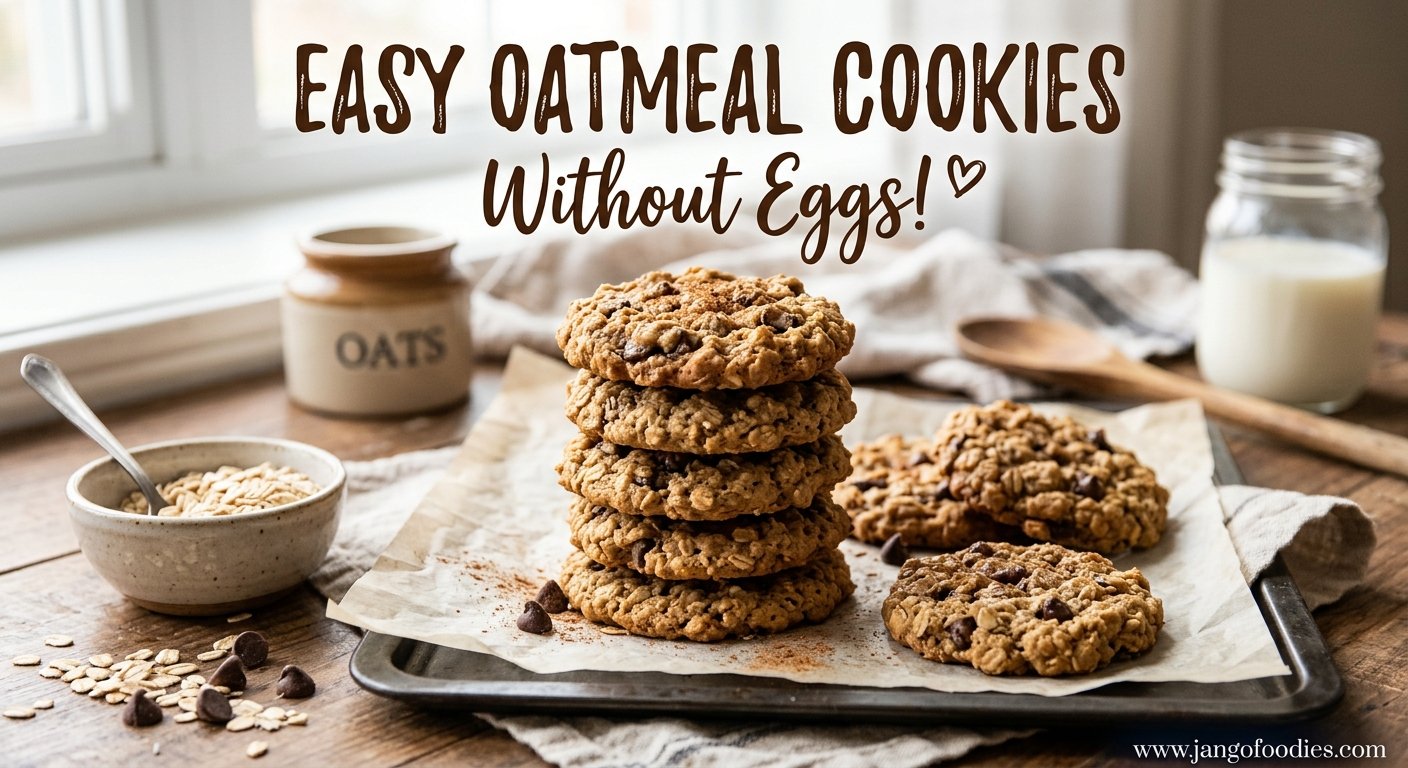
Easy Oatmeal Cookies Without Eggs – Soft, Chewy, and Delicious

If you love homemade cookies but don’t have eggs in your kitchen, these easy oatmeal cookies without eggs are the perfect solution. They are soft in the center, slightly crispy around the edges, and packed with the comforting flavor of oats, butter, and brown sugar. Whether you have an egg allergy, follow an egg-free diet, or simply ran out of eggs, you can still enjoy delicious homemade oatmeal cookies with simple pantry ingredients.
The best part about this recipe is how easy it is to prepare. You don’t need special baking equipment, complicated techniques, or expensive ingredients. With a few everyday items and a little time, you can make a batch of chewy oatmeal cookies that taste just as satisfying as traditional cookies.
These eggless oatmeal cookies are perfect for breakfast treats, afternoon snacks, lunchboxes, or sharing with family and friends. You can also customize them with chocolate chips, raisins, nuts, or cinnamon to create your favorite flavor combination.
In this guide, you’ll learn how to make oatmeal cookies without eggs, which ingredients work best, how to achieve a soft and chewy texture, and how to store your cookies so they stay fresh.
Why You’ll Love These Easy Oatmeal Cookies Without Eggs
There are plenty of reasons to make these homemade eggless oatmeal cookies. They are simple, delicious, and suitable for different occasions.
- No eggs required: This recipe uses simple ingredients to create a delicious cookie without eggs.
- Easy to make: You only need basic baking skills, a mixing bowl, and a baking tray.
- Soft and chewy: The combination of butter, brown sugar, and oats creates a wonderfully chewy texture.
- Pantry-friendly ingredients: Most of the ingredients are common items you may already have at home.
- Easy to customize: Add chocolate chips, raisins, chopped nuts, or dried cranberries.
- Perfect for small gatherings: Make them for family snacks, school lunchboxes, or casual get-togethers.
- Beginner-friendly: The straightforward preparation makes this recipe suitable for new bakers.
These cookies are proof that you don’t need complicated ingredients to make something delicious at home.
Ingredients for Easy Oatmeal Cookies Without Eggs
One of the best things about this recipe is that it uses affordable, everyday ingredients. Each ingredient has an important role in creating the perfect cookie texture and flavor.
1. Old-Fashioned Rolled Oats
Rolled oats are the main ingredient in oatmeal cookies. They provide a hearty texture, a slightly nutty flavor, and that classic oatmeal cookie appearance.
Old-fashioned rolled oats are recommended because they hold their shape during baking and create a satisfying chewy texture. Quick oats can also work, although the cookies may have a softer, less textured consistency.
2. All-Purpose Flour
All-purpose flour provides structure and helps the cookies hold their shape. It balances the oats and prevents the cookies from becoming too crumbly.
Measure your flour carefully. Adding too much flour can make your oatmeal cookies dry or dense.
3. Unsalted Butter
Butter gives these eggless oatmeal cookies their rich flavor and tender texture. It also helps the edges become lightly golden during baking.
Use softened butter rather than melted butter for this recipe. Softened butter should be easy to press with a finger but should not look oily or melted.
4. Brown Sugar
Brown sugar adds sweetness, moisture, and a subtle caramel-like flavor. It is particularly helpful for creating soft and chewy oatmeal cookies.
Light brown sugar works beautifully, but dark brown sugar can be used for a deeper molasses flavor.
5. Granulated Sugar
A little granulated sugar balances the flavor of brown sugar and helps the cookies develop lightly crisp edges.
Using both types of sugar creates a more interesting texture than using only one.
6. Milk
Milk helps bring the dough together and replaces some of the moisture that eggs would normally provide.
You can use dairy milk or an unsweetened plant-based alternative, such as oat milk or almond milk.
7. Baking Soda
Baking soda helps the cookies spread and develop a tender texture. It also contributes to a lightly browned exterior.
Make sure your baking soda is fresh for the best baking results.
8. Vanilla Extract
Vanilla extract adds warmth and enhances the buttery, sweet flavor of the cookies. Even a small amount can make a noticeable difference.
9. Ground Cinnamon
Cinnamon is optional, but it complements the natural flavor of oats and brown sugar. It gives the cookies a cozy homemade aroma.
10. Salt
A small amount of salt balances the sweetness and enhances the overall flavor. If you’re using salted butter, reduce the added salt slightly.
Recipe Information
- Preparation Time: 15 minutes
- Chilling Time: 20 minutes
- Baking Time: 10–12 minutes
- Total Time: Approximately 45–50 minutes
- Servings: 16 cookies
- Course: Dessert, Snack
- Cuisine: American
- Difficulty: Easy
- Dietary Preference: Egg-free
Ingredients
- 1 cup old-fashioned rolled oats
- ¾ cup all-purpose flour
- ½ cup unsalted butter, softened
- ½ cup packed brown sugar
- ¼ cup granulated sugar
- 2 tablespoons milk
- 1 teaspoon vanilla extract
- ½ teaspoon baking soda
- ½ teaspoon ground cinnamon (optional)
- ¼ teaspoon salt
- ½ cup chocolate chips or raisins (optional)
How to Make Easy Oatmeal Cookies Without Eggs
Making homemade oatmeal cookies without eggs is simple. Follow these easy steps to prepare soft, chewy, and flavorful cookies.
Step 1: Prepare Your Baking Equipment
Start by preheating your oven to 350°F (175°C). Line a baking sheet with parchment paper to prevent the cookies from sticking.
If you don’t have parchment paper, you can lightly grease your baking sheet. However, parchment paper makes cleanup easier and helps the cookies bake more evenly.
Measure all your ingredients before beginning so the preparation process is smooth and organized.
Step 2: Mix the Dry Ingredients
In a medium-sized bowl, combine the all-purpose flour, rolled oats, baking soda, ground cinnamon, and salt.
Stir the ingredients together using a spoon or whisk until evenly distributed.
Mixing the dry ingredients separately helps prevent pockets of baking soda or salt from forming in the finished cookies.
Set this bowl aside while you prepare the butter and sugar mixture.
Step 3: Cream the Butter and Sugars
In a large mixing bowl, add the softened butter, brown sugar, and granulated sugar.
Using a hand mixer or a sturdy wooden spoon, beat the mixture until it becomes light, creamy, and well combined. This usually takes about 2–3 minutes with a mixer or a little longer by hand.
Creaming the butter and sugar helps create a tender cookie texture and distributes the sweetness throughout the dough.
Avoid using melted butter because it can make the dough too loose and cause the cookies to spread excessively.
Step 4: Add Milk and Vanilla
Pour the milk into the butter and sugar mixture. Add the vanilla extract and stir until everything is combined.
Milk provides moisture and helps bind the ingredients together in place of eggs.
The mixture may look slightly different from traditional cookie dough, but that’s completely normal for an eggless oatmeal cookie recipe.
Step 5: Combine the Wet and Dry Ingredients
Gradually add the dry ingredient mixture to the wet ingredients.
Use a spatula or wooden spoon to mix gently until a thick cookie dough forms. Avoid overmixing because excessive mixing can develop gluten in the flour and make the cookies tougher.
If you’re adding chocolate chips, raisins, or chopped nuts, fold them into the dough at this stage.
The finished dough should be soft enough to scoop but firm enough to hold its shape.
Step 6: Chill the Cookie Dough
Cover the bowl and place the dough in the refrigerator for approximately 20 minutes.
Chilling is especially helpful for eggless oatmeal cookies because it allows the butter to firm up and the oats to absorb some moisture.
This step can help reduce excessive spreading during baking and improve the cookies’ texture.
If your kitchen is particularly warm or the dough feels sticky, you can chill it for an additional 10–15 minutes.
Step 7: Shape the Cookies
Remove the chilled dough from the refrigerator.
Scoop approximately 1½ tablespoons of dough for each cookie and roll it gently into a ball. Place the dough balls on the prepared baking sheet, leaving about 2 inches of space between them.
Gently flatten each ball with your fingers or the back of a spoon. Eggless oatmeal cookies may not spread exactly like traditional cookies, so slightly flattening them helps create an even shape.
Avoid making them too thin if you prefer soft, chewy centers.
Step 8: Bake the Cookies
Place the baking sheet in the preheated oven and bake for approximately 10–12 minutes.
The edges should look lightly golden, while the centers may still appear slightly soft. This is normal because the cookies will continue to set as they cool.
Avoid overbaking them. Leaving the cookies in the oven for too long can result in a dry or hard texture.
Baking time may vary depending on your oven and the size of your cookies, so keep an eye on them during the final few minutes.
Step 9: Cool and Serve
Remove the baking sheet from the oven and let the cookies rest on it for about 5 minutes.
This resting period allows the cookies to firm up without breaking.
Carefully transfer them to a wire rack to cool completely.
Serve your homemade oatmeal cookies with a glass of milk, tea, coffee, or your favorite warm beverage.
Tips for Making the Best Eggless Oatmeal Cookies
A few simple baking techniques can make a big difference in the final result.
Use softened butter: Softened butter combines easily with sugar and helps create a tender texture. Butter that is too warm or melted may cause excessive spreading.
Measure flour correctly: Too much flour can make cookies dry and crumbly. Use a kitchen scale if available, or spoon flour into your measuring cup and level it off.
Don’t skip chilling: Chilling helps the dough become easier to handle and can prevent the cookies from spreading too much.
Avoid overmixing: Mix the dough only until the ingredients are combined. Overmixing can make the cookies firm.
Watch the baking time: Remove the cookies when their edges are lightly golden and the centers still look a little soft.
Allow proper cooling: The cookies need a few minutes to set after baking. Moving them too early may cause them to break apart.
Delicious Variations of Oatmeal Cookies Without Eggs
One of the best things about homemade oatmeal cookies is how easily you can change the flavor. Once you’ve mastered the basic recipe, try some of these delicious variations.
Chocolate Chip Oatmeal Cookies
Add ½ cup of semi-sweet chocolate chips to the dough before chilling. The chocolate melts slightly during baking, creating delicious pockets of sweetness that pair beautifully with oats.
You can also sprinkle a few extra chocolate chips on top of each cookie before baking for a bakery-style appearance.
Oatmeal Raisin Cookies
For a traditional oatmeal cookie flavor, replace the chocolate chips with ½ cup of raisins.
If your raisins are particularly dry, soak them in warm water for about 5–10 minutes, then drain and pat them dry before adding them to the dough.
A little extra cinnamon can make this variation even more flavorful.
Peanut Butter Oatmeal Cookies
Add ¼ cup of creamy peanut butter to the butter and sugar mixture. Peanut butter provides a rich, nutty flavor that complements the oats.
Because peanut butter changes the dough’s consistency, you may need a small adjustment to the flour or milk to achieve a scoopable texture.
Cinnamon Oatmeal Cookies
If you enjoy warm, comforting flavors, increase the cinnamon to 1 teaspoon and add a tiny pinch of nutmeg.
These cookies are particularly enjoyable during cooler weather and pair wonderfully with hot tea or coffee.
Vegan Oatmeal Cookies
To make this recipe vegan, replace the butter with a suitable plant-based butter and use unsweetened plant-based milk.
Check that any chocolate chips or other mix-ins are also dairy-free. Always check ingredient labels if you’re preparing the cookies for someone with food allergies.
How to Store Homemade Oatmeal Cookies
Proper storage helps keep your eggless oatmeal cookies fresh and delicious.
At room temperature: Allow the cookies to cool completely before placing them in an airtight container. Store them in a cool, dry place for approximately 3–4 days.
In the refrigerator: If your kitchen is particularly warm, you can refrigerate the cookies in an airtight container for up to a week. Let them come closer to room temperature before serving for a softer texture.
In the freezer: Place fully cooled cookies in a freezer-safe container or bag, separating layers with parchment paper. Freeze for up to 2–3 months for best quality.
To enjoy frozen cookies, thaw them at room temperature. You can also warm them briefly in the microwave to make them soft and slightly warm.
Can You Freeze Eggless Oatmeal Cookie Dough?
Yes, you can freeze oatmeal cookie dough, which is a convenient way to prepare homemade cookies in advance.
Scoop the dough into individual portions and place them on a parchment-lined tray. Freeze until firm, then transfer the portions to a freezer-safe bag or airtight container.
Label the container with the date and freeze for up to 2–3 months for best quality.
When you’re ready to bake, place the frozen dough portions on a lined baking sheet and allow them to soften slightly while the oven preheats. Bake until the edges are lightly golden, adding a little extra baking time if needed.
Freezing individual portions makes it easy to bake a few fresh cookies whenever you want.
What Makes Oatmeal Cookies Without Eggs Soft and Chewy?
The texture of eggless oatmeal cookies depends on the balance of moisture, fat, sugar, and dry ingredients.
Brown sugar plays an important role because it contains molasses, which contributes moisture and a chewy texture. Butter adds richness and tenderness, while milk helps bring the dough together.
Rolled oats provide structure and a hearty bite. Chilling the dough also helps control spreading and gives the oats time to absorb moisture.
The most important factor is avoiding overbaking. Cookies that look slightly soft in the center when removed from the oven will continue to firm up as they cool.
Common Mistakes to Avoid
Even a simple recipe can go wrong if a few important details are overlooked.
- Using melted butter: This may cause the cookies to spread too much and become greasy.
- Adding too much flour: Excess flour can produce dry, dense cookies.
- Skipping the chilling step: Warm dough may spread excessively during baking.
- Overbaking: Baking for too long can make the cookies hard rather than soft and chewy.
- Making uneven cookie portions: Different-sized cookies bake at different rates, which can lead to inconsistent results.
- Moving cookies too soon: Freshly baked cookies are delicate and need time to set on the baking sheet.
Following the recommended measurements and baking instructions will help you achieve more consistent results.
What to Serve with Eggless Oatmeal Cookies
These easy oatmeal cookies are delicious on their own, but you can make snack time even more enjoyable by pairing them with other treats.
- Cold milk: A classic combination that balances the sweetness of the cookies.
- Hot coffee: The slightly bitter flavor of coffee complements the buttery sweetness.
- Warm tea: A cup of black tea or chai makes a comforting afternoon snack.
- Fresh fruit: Serve the cookies with sliced apples, bananas, or strawberries.
- Vanilla ice cream: Sandwich a scoop of ice cream between two cooled cookies for a simple dessert.
You can also crumble the cookies over yogurt or ice cream for extra texture.
Frequently Asked Questions
1. Can I make oatmeal cookies without eggs?
Yes. You can make delicious oatmeal cookies without eggs using ingredients such as butter, brown sugar, milk, and oats. This recipe uses milk to provide moisture and help bind the dough.
2. Why are my eggless oatmeal cookies crumbly?
Cookies may become crumbly if the dough contains too much flour, not enough moisture, or has been overbaked. Measure the ingredients carefully and avoid baking the cookies for too long.
3. Can I use quick oats instead of rolled oats?
Yes, quick oats can be used instead of rolled oats. However, they absorb moisture differently and create a softer, less textured cookie. Old-fashioned rolled oats are recommended for a classic chewy texture.
4. Can I make these cookies without brown sugar?
Yes. You can substitute the brown sugar with additional granulated sugar, although the cookies may have a slightly different flavor and texture. A little maple syrup can add flavor, but it also changes the dough’s moisture, so the recipe may need adjustment.
5. How do I make oatmeal cookies softer?
For softer cookies, use softened butter, avoid adding too much flour, and remove the cookies from the oven when the centers still look slightly soft. Allow them to cool on the baking sheet before transferring them to a rack.
6. Can I make these oatmeal cookies gluten-free?
Yes, you can try using a certified gluten-free rolled oat product and a suitable gluten-free all-purpose flour blend. Results may vary depending on the flour blend, so follow its recommended substitution guidance.
7. Can I make oatmeal cookies without a mixer?
Absolutely. A sturdy wooden spoon, spatula, and mixing bowl are enough to prepare this recipe. Make sure the butter is softened so it is easier to cream with the sugars by hand.
8. How do I know when the cookies are done?
The cookies are generally ready when the edges look lightly golden and the centers appear soft but no longer wet. They will continue to set as they cool.
9. Are these cookies suitable for people with egg allergies?
This recipe does not call for eggs, but it is important to check the labels on all ingredients for possible egg-containing additives or cross-contact warnings. If the cookies are being prepared for someone with a serious allergy, use ingredients and equipment that meet their allergy-safety requirements.
10. Can I prepare the dough ahead of time?
Yes. You can prepare the dough, cover it, and refrigerate it for up to 24 hours before baking. If it becomes very firm, let it sit briefly at room temperature until it is easy to scoop.
Final Thoughts
These easy oatmeal cookies without eggs are a simple way to enjoy homemade baking with everyday ingredients. They are soft, chewy, buttery, and full of comforting oat flavor, making them a wonderful treat for almost any occasion.
Whether you’re baking because you ran out of eggs, need an egg-free dessert, or simply want to try something new, this recipe is easy to follow and beginner-friendly. You can keep the cookies simple or customize them with chocolate chips, raisins, nuts, or your favorite spices.
With the right measurements, a short chilling period, and careful baking, you can create a batch of delicious oatmeal cookies that everyone can enjoy. Make them for an afternoon snack, pack them for lunch, or serve them as a homemade dessert with your favorite drink.
Once you try these chewy eggless oatmeal cookies, they may become one of your favorite recipes to make whenever you’re craving something sweet.