
One-Pan Tuscan Butter Gnocchi
There are some dinners that feel like a small act of kindness towards yourself, and this Tuscan butter gnocchi is one of them. It is the kind of meal you make on an evening when you are tired, when the day has been long, and when the idea of washing three pots and a colander feels like too much to ask. One pan, twenty-five minutes, and a bowl of soft, pillowy gnocchi coated in a garlicky butter sauce with sun-dried tomatoes and spinach — it is comfort food in the truest sense, the kind that makes the kitchen smell wonderful and the evening feel a little bit better.
I first made a version of this on a night when the fridge was nearly empty and I had a packet of gnocchi that had been sitting in the pantry for weeks, waiting for an idea. I had butter, garlic, a jar of sun-dried tomatoes, and a bag of spinach that was one day away from needing to be used, and that was the whole inventory. I browned the butter, tossed in the garlic and tomatoes, added the gnocchi straight from the packet — no boiling, no colander — and watched as the starch from the gnocchi thickened the sauce into something silky and rich. The spinach wilted in at the end, a handful of parmesan went over the top, and dinner was done before I had time to regret not ordering takeaway.
What makes this recipe special is that the gnocchi cook directly in the sauce. Most gnocchi recipes start with a pot of boiling water, and that water goes straight down the drain, taking with it all the starch that could have thickened your sauce. Here, the gnocchi release their starch into the pan as they cook, and the sauce becomes creamy and glossy without any cream at all. It is a small piece of kitchen logic that feels like a discovery the first time you see it work, and it means there is genuinely only one pan to wash at the end.
This is also a recipe that bends to whatever you have. No spinach? Use kale, or peas, or asparagus. No sun-dried tomatoes? Use cherry tomatoes, or roasted red peppers, or mushrooms. Want to make it a proper meal for hungry people? Add some cooked chicken or a tin of white beans. The bones of the recipe — butter, garlic, gnocchi, and a splash of stock — will carry almost any variation you throw at them, and that reliability is what earns a recipe a permanent place in the weekly rotation.
Why You’ll Love This Recipe
The first reason is that it is genuinely one pan. There is no pot of water to boil, no colander to wash, no second pan for the sauce. Everything happens in a single large skillet, from browning the butter to wilting the spinach, and that means dinner is on the table in twenty-five minutes and the washing up takes about two minutes. On a busy weeknight, that is not a small thing — it is the difference between cooking dinner and ordering it.
The second reason is the sauce, which is far richer than its ingredient list suggests. Browning the butter gives it a nutty, toasty depth that plain melted butter never has, and the garlic, sun-dried tomatoes, and parmesan build on that base until the sauce tastes like something that simmered for hours. The gnocchi starch thickens everything into a silky coating that clings to every piece, and a splash of cream at the end — just a splash — makes it luxurious without being heavy. It is the kind of sauce you will find yourself mopping up with bread, and there is no shame in that.
The third reason is the gnocchi themselves. Good shop-bought gnocchi are soft and pillowy when they are cooked properly, with a gentle bite that is deeply satisfying, and cooking them in the sauce rather than in water means they absorb flavour as they cook instead of just getting hot. The outside of each piece gets lightly golden where it touches the pan, while the inside stays tender. If you have only ever had gnocchi boiled and drowned in jarred sauce, this version will be a revelation. For another creamy, one-pan comfort dish, our easy chicken pasta without heavy cream uses the same trick of letting the pasta cook in its own sauce.
Finally, this recipe is endlessly forgiving. It does not matter if your gnocchi are a little overcooked or a little undercooked — they will still taste wonderful in this sauce. It does not matter if you use fresh spinach or frozen, or if you swap the sun-dried tomatoes for something else. It is a recipe that works with whatever you have and however much attention you can give it, which is exactly what a weeknight dinner should do. And it looks beautiful, too — the red of the tomatoes, the green of the spinach, the golden sauce — which means it works just as well for a casual dinner with friends as it does for a Tuesday night at home.
Ingredients You’ll Need
The ingredient list is short and mostly pantry staples. The gnocchi are the star, so buy a good brand — the shelf-stable packets in the pasta aisle are perfectly fine, and the fresh ones from the fridge section are even better if you can find them. Avoid the very cheapest gnocchi, which can be dense and gummy, and look for a brand where potato is the first ingredient rather than flour.
- 4 tablespoons unsalted butter
- 4 garlic cloves, thinly sliced
- 1/2 teaspoon red pepper flakes
- 1 pound potato gnocchi, shelf-stable or fresh
- 1 cup chicken or vegetable stock
- 1/2 cup sun-dried tomatoes in oil, drained and sliced
- 1/2 cup heavy cream
- 3 cups baby spinach, loosely packed
- 1/2 cup grated Parmesan cheese, plus extra for serving
- 1 teaspoon Italian seasoning
- 1/2 teaspoon salt
- 1/2 teaspoon black pepper
- 1 tablespoon fresh basil leaves, torn, for serving
- 1 teaspoon lemon zest, for serving
For the sun-dried tomatoes, the oil-packed kind are the ones to buy — they are soft, flavourful, and easy to slice, while the dry-packed kind can be tough and need soaking. Drain them well before you slice them, but do not rinse them; the oil they are packed in is full of flavour, and a little of it in the pan will not hurt. If you only have dry-packed sun-dried tomatoes, soak them in warm water for ten minutes until they soften, then drain and slice them.
For the spinach, baby spinach is the easiest option because the leaves are tender and they wilt in about a minute. If you only have regular spinach, chop it roughly first. Frozen spinach will work too — thaw it, squeeze out as much water as you possibly can, and add it with the cream. Whatever you use, make sure it is dry, because wet spinach will thin out the sauce. The same principle of building a creamy sauce without much cream shows up in our easy creamy chicken pasta without cream, where a little starch and a little cheese do the heavy lifting.
How to Make One-Pan Tuscan Butter Gnocchi
The whole recipe moves in one pan and in one direction: you build flavour, you add the gnocchi and liquid, you let it simmer, and you finish it with spinach and cheese. There is no juggling, no timing puzzle, no moment where three things need your attention at once. It is a calm recipe, and that is part of its charm. Before you start, have all your ingredients measured and within reach, because once the butter starts browning, things move quickly.
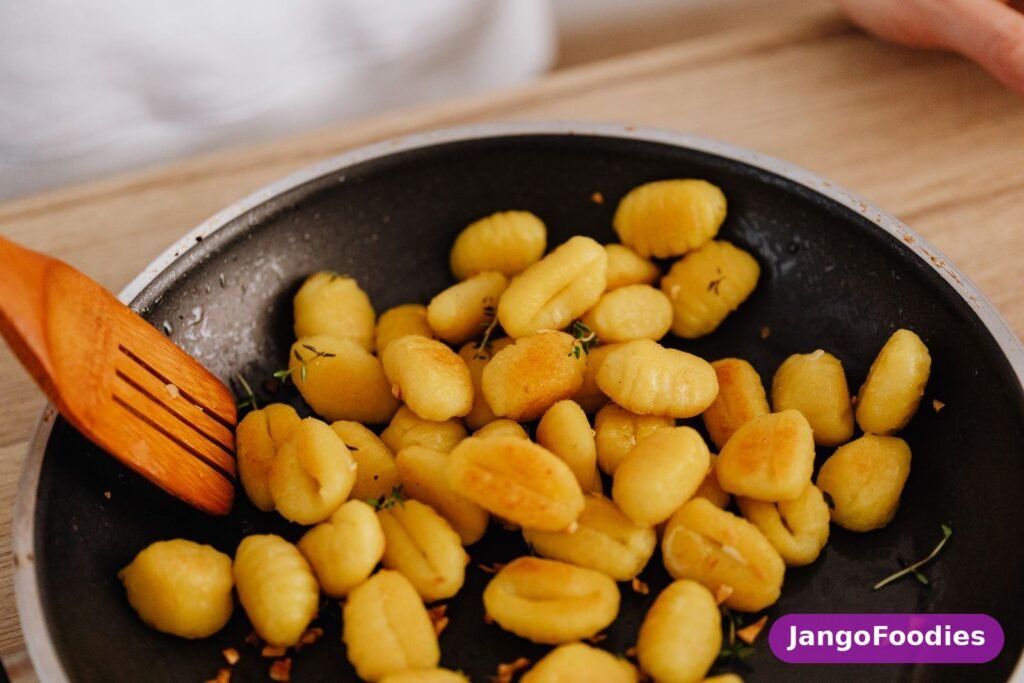
Start with a large, deep skillet — a 12-inch skillet is ideal, because the gnocchi need room to spread out in a single layer. Melt the butter over medium heat and let it cook for 2 to 3 minutes, swirling the pan occasionally, until it turns a warm golden brown and smells nutty and toasty. This is brown butter, and it is the foundation of the whole dish. Watch it closely, because butter goes from perfectly browned to burnt in about thirty seconds, and burnt butter tastes bitter and will ruin the sauce. As soon as you see golden flecks at the bottom of the pan and smell that nutty aroma, move on to the next step.
Add the sliced garlic and red pepper flakes to the brown butter and cook for about thirty seconds, stirring constantly, until the garlic is fragrant and just starting to turn golden at the edges. Do not let the garlic brown too much — it will continue cooking in the hot pan, and garlic that goes past golden turns bitter very quickly. Then add the gnocchi to the pan in a single layer and let them cook undisturbed for 2 to 3 minutes, until the undersides are lightly golden. This brief sear is what gives the gnocchi their lovely texture: a lightly crisped outside and a soft, pillowy inside. If your pan is crowded, the gnocchi will steam instead of searing, so use a big pan and give them space.
Pour in the stock and add the sun-dried tomatoes, Italian seasoning, salt, and pepper. Stir everything together, scraping up any browned bits from the bottom of the pan — those bits are pure flavour, and the stock will dissolve them into the sauce. Bring the liquid to a gentle simmer, then reduce the heat to medium-low, cover the pan, and cook for 5 to 6 minutes, stirring once or twice, until the gnocchi are tender all the way through and the sauce has thickened. The gnocchi will release starch into the liquid as they cook, and you will see the sauce turn glossy and start to coat the back of a spoon. If the pan looks dry before the gnocchi are done, add a splash more stock; if the sauce looks too thin, leave the lid off for the last minute or two so it can reduce.
Uncover the pan and stir in the cream and half of the Parmesan cheese. Let it simmer for one minute, stirring gently, until the cheese has melted and the sauce is silky and smooth. Then add the spinach in handfuls, stirring each handful in and letting it wilt before adding the next. It will look like far too much spinach at first — three cups of baby spinach is a big, fluffy pile — but it wilts down to almost nothing in about a minute, and that is exactly how it should be. Taste the sauce now and adjust the seasoning: a little more salt if it needs it, a pinch more red pepper flakes if you want heat, a squeeze of lemon juice if it tastes too rich. Spoon the gnocchi into warm bowls, scatter the remaining Parmesan and the torn basil over the top, and finish with the lemon zest. Serve right away, while the sauce is still glossy and the gnocchi are hot. If you like this style of cooking, the Taste of Home gnocchi Alfredo recipe is another creamy gnocchi dish worth trying, and the BBC Good Food spinach and ricotta gnocchi recipe is a lovely from-scratch option for a weekend.
Tips for Perfect One-Pan Tuscan Butter Gnocchi
The first tip is about the butter. Browning the butter is not an optional flourish — it is the single biggest flavour upgrade in this recipe, and it costs you nothing but two minutes of attention. Brown butter tastes nutty, toasty, and complex, while plain melted butter tastes like, well, melted butter. The trick is to watch it and smell it rather than timing it: when the foam subsides, when you see golden-brown flecks at the bottom of the pan, and when the kitchen smells like toasted hazelnuts, it is done. Take the pan off the heat immediately if you are unsure, because the residual heat will keep cooking it for a few seconds.
The second tip is about the gnocchi themselves. Do not boil them first. The whole point of this recipe is that the gnocchi cook in the sauce, releasing their starch and thickening it as they go. If you boil them separately, you lose that starch, you lose the flavour they absorb from the sauce, and you gain an extra pot to wash. Trust the method: a pound of gnocchi, a cup of stock, a covered pan, five or six minutes, and they will be perfectly tender. If your gnocchi are the fresh refrigerated kind, they may cook a minute faster; if they are the shelf-stable kind, they may need a minute longer. Either way, taste one before you move on.
The third tip is about the liquid. One cup of stock is the right amount for a pound of gnocchi, but the exact amount you need depends on your pan, your heat, and how tightly your lid fits. If the pan looks dry halfway through cooking, add a splash more stock — two or three tablespoons at a time. If the sauce looks too thin at the end, take the lid off and let it bubble for a minute. The sauce should coat the gnocchi generously without pooling at the bottom of the pan. It is better to start with a little less liquid and add more than to start with too much and try to reduce it, because reducing takes time and the gnocchi can overcook while you wait.
The fourth tip is about the spinach. Add it last, in handfuls, and let each handful wilt before adding the next. If you dump all three cups in at once, the spinach on top will stay raw while the spinach on the bottom overcooks, and you will end up stirring a big clump around the pan. Adding it gradually takes about a minute longer and gives you evenly wilted, bright green spinach that is distributed through the whole dish. The same goes for the Parmesan — add it gradually and stir it in, rather than dumping it all in at once, or it can clump.
The fifth tip is to serve it immediately. Gnocchi in sauce are at their best in the first ten minutes after cooking, when the sauce is glossy and the gnocchi are tender. As the dish sits, the gnocchi continue to absorb liquid from the sauce, and after twenty minutes they can start to go soft and the sauce can thicken too much. If you need to hold the dish for a few minutes, keep the lid on and the heat very low, and stir in a splash of stock or cream just before serving to loosen the sauce back up.
Variations to Try
Once you have the basic recipe down, it adapts to almost anything. For a heartier version, add a pound of sliced Italian sausage or diced chicken breast to the pan before the butter — brown the meat first, set it aside, and stir it back in with the cream. The sausage version is particularly good, because the fennel and spice in the sausage deepen the Tuscan character of the dish. For a vegetarian protein boost, stir in a tin of drained white beans or chickpeas with the cream; they soak up the sauce beautifully and turn the dish into a proper meal.
For a mushroom version, add eight ounces of sliced mushrooms to the pan after the garlic and cook them until they are golden and their moisture has evaporated, before adding the gnocchi. Mushrooms add an earthy, savoury depth that pairs wonderfully with the brown butter, and they make the dish feel more substantial without adding meat. For a spring version, swap the sun-dried tomatoes for a cup of halved cherry tomatoes and a cup of fresh peas, and finish with mint instead of basil — it is lighter, brighter, and lovely on a warm evening.
For a richer version, double the cream and add a handful of crumbled goat cheese or torn fresh mozzarella at the end, letting it melt into the sauce in soft, creamy pockets. For a lighter version, skip the cream entirely and add an extra splash of stock with a knob of butter at the end — the gnocchi starch will still thicken the sauce, and it will be lighter but still silky. For a spicy version, double the red pepper flakes and add a pinch of cayenne to the butter. And if you want to turn this into a baked dish, transfer the finished gnocchi to a baking dish, top with extra Parmesan and a handful of breadcrumbs, and broil for two minutes until golden and bubbling. Our one pan chicken and rice for two is another cosy one-pan dinner that works the same way — everything cooks together, and the rice absorbs all the flavour, just like the gnocchi do here.
Serving Ideas
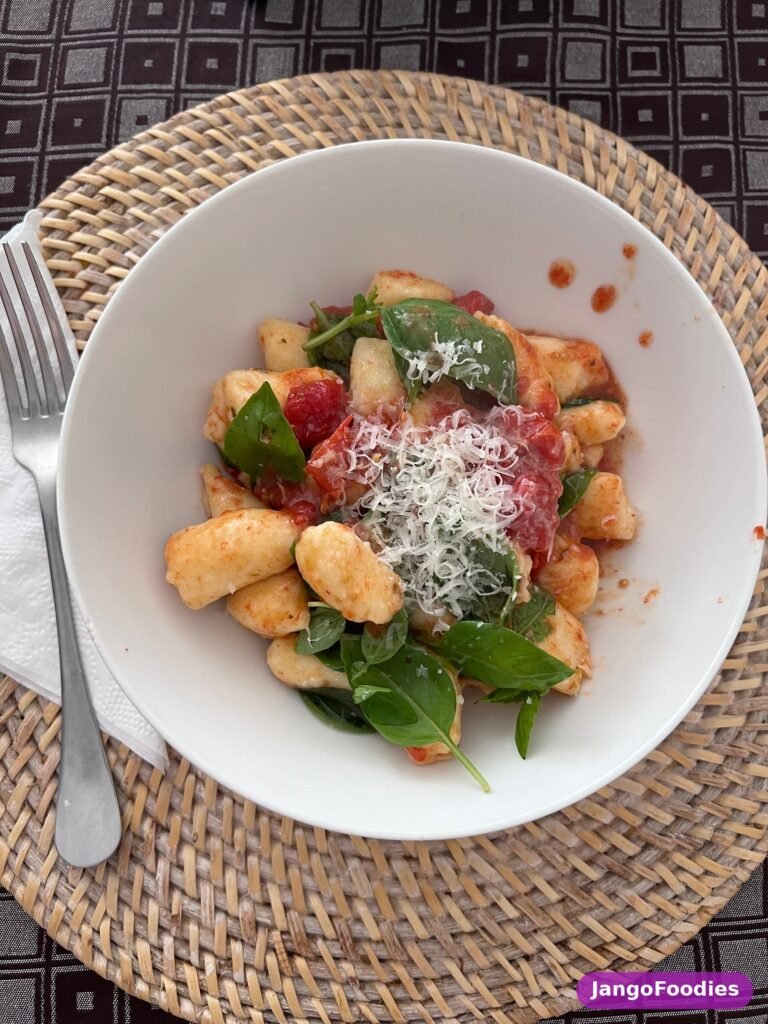
On its own, this gnocchi is a complete meal, and the simplest serving is the best: spoon it into warm, shallow bowls, scatter over extra Parmesan and torn basil, and set a loaf of crusty bread on the table for mopping up the sauce. The bread is not optional in my house — the sauce is too good to leave behind, and a good piece of sourdough or ciabatta is the only proper way to finish the bowl. A simple green salad with a sharp lemon dressing on the side cuts through the richness and gives you something fresh and crisp to balance the creamy gnocchi.
As part of a larger Italian-inspired dinner, the gnocchi work beautifully as a first course before a simple roast chicken or a piece of grilled fish. Serve smaller portions — about half a cup each — as a starter, and follow it with something light. The gnocchi are rich enough that a small portion feels generous, and they set the tone for the meal without filling everyone up before the main course arrives.
For a casual dinner with friends, serve the gnocchi family-style, straight from the skillet, set in the middle of the table with a stack of bowls and a bottle of wine. There is something warm and generous about a skillet of food in the middle of the table, and it invites people to help themselves and go back for seconds. A simple tomato and mozzarella salad and some roasted vegetables alongside will round out the table without adding much work.
For a lighter lunch, serve a smaller portion of the gnocchi with a big handful of rocket and a drizzle of good olive oil over the top. The peppery rocket against the creamy gnocchi is a lovely contrast, and it turns a rich dinner dish into something that works perfectly at midday. A glass of sparkling water with lemon, or a light white wine if it is the weekend, is the right partner.
Storage and Reheating
Leftover gnocchi will keep in the fridge for up to three days in an airtight container, though the texture is best on the first day. The gnocchi will continue to absorb sauce as they sit, so the leftovers will be thicker and softer than the freshly made dish — still delicious, just different. If you know you will have leftovers, you can slightly undercook the gnocchi by a minute, which helps them hold up better on reheating.
To reheat, the stovetop is the best option. Put the gnocchi in a skillet over medium-low heat with a splash of stock or cream — about two tablespoons per serving — and stir gently until heated through, about 3 to 4 minutes. The extra liquid loosens the sauce back up and stops the gnocchi from sticking to the pan. The microwave will work in a pinch: cover the bowl loosely, heat in thirty-second bursts, and stir between each burst, adding a splash of water if the sauce looks too thick. Avoid reheating the gnocchi more than once, as they will go soft and gummy.
This dish does not freeze well once cooked, because the gnocchi go mushy on thawing and the cream sauce can separate. If you want to prep ahead, you can make the sauce base — the brown butter, garlic, tomatoes, and stock — up to two days ahead and keep it in the fridge, then reheat it and cook the gnocchi in it fresh when you are ready to eat. The whole dish only takes twenty-five minutes from scratch, though, so there is rarely a reason to prep it ahead.
Frequently Asked Questions
Do I really not need to boil the gnocchi first?
That is correct, and it is the whole point of this recipe. The gnocchi cook directly in the stock and sauce, which does two things: it saves you a pot and a colander, and it lets the starch from the gnocchi thicken the sauce naturally, which is what makes the sauce so silky without much cream. The gnocchi absorb flavour from the sauce as they cook, which they never do in plain boiling water. Just make sure there is enough liquid in the pan and that the lid is on so the steam can do its work. If the pan looks dry before the gnocchi are tender, add a splash more stock.
Can I use frozen gnocchi?
Yes, frozen gnocchi work fine in this recipe, and you do not need to thaw them first. Add them straight from the freezer to the pan and give them an extra minute or two of cooking time. The one thing to watch is that frozen gnocchi release a little extra water as they thaw, which can thin the sauce slightly — just leave the lid off for the last minute or two of cooking so the extra liquid can evaporate. Fresh gnocchi from the fridge section are the most delicate and cook the fastest, while shelf-stable gnocchi are the sturdiest and hold up best to reheating.
What can I use instead of sun-dried tomatoes?
Cherry tomatoes are the easiest swap — halve a cup of them and add them with the stock, and they will soften and burst slightly as the gnocchi cook, giving you a fresher, lighter sauce. Roasted red peppers from a jar, drained and sliced, are another good option, and they give the dish a sweet, smoky note. Sliced mushrooms work well too, though you should cook them first until they are golden. And if you have a jar of pesto in the fridge, a spoonful stirred in at the end with the cream gives you a completely different but equally delicious version of the dish.
Can I make this dairy-free?
You can, with a couple of swaps. Use a good dairy-free butter for browning — it will not brown in quite the same way as dairy butter, but it will still taste rich and savoury. Replace the cream with full-fat coconut milk or a dairy-free cream alternative, and use a dairy-free Parmesan-style cheese or nutritional yeast for the cheesy flavour. The sauce will be slightly less rich, but the garlic, sun-dried tomatoes, and brown butter carry plenty of flavour on their own. The dish will still be delicious, and it will still be a one-pan dinner.
How do I know when the gnocchi are done?
The best way is to taste one. A cooked gnocchi should be tender all the way through, soft and pillowy, with no firm or doughy centre. If you cut one open, it should be the same texture all the way through, not dense in the middle. Visually, the gnocchi will look slightly puffed and the sauce will have thickened and turned glossy. The timing is usually 5 to 6 minutes in a covered pan, but it depends on the brand and type of gnocchi, so start tasting at 5 minutes and go from there. It is better to check early than to overcook them, because overcooked gnocchi go soft and fall apart in the sauce.
Can I add chicken or sausage to this recipe?
Absolutely, and it is a great way to turn this into a heartier meal. For chicken, dice a pound of boneless chicken breast or thigh into bite-sized pieces, season with salt and pepper, and brown them in the pan with a little olive oil before you start the butter. Set the chicken aside, make the recipe as written, and stir the chicken back in with the cream. For sausage, remove the casings from a pound of Italian sausage, crumble it into the pan, and cook until browned, then set it aside and proceed the same way. The sausage version is particularly good — the fennel in the sausage is a natural match for the Tuscan flavours. If you like one-pan meals with chicken, our chicken skillet with frozen vegetables is another quick, practical dinner that cooks everything in a single pan.