
Baked Zucchini Fritters with Parmesan
Zucchini fritters are one of those recipes that solve a very real kitchen problem, which is what to do with too many zucchini. Anyone who has grown them knows the feeling. One week there are none, the next week there are more than any family could possibly eat, sitting on the counter, getting bigger by the day. Fritters are my favourite answer, because they turn a pile of plain zucchini into something crisp, golden, and genuinely exciting, and they use up a lot of zucchini at once, which is no small thing in August.
I started baking my fritters instead of frying them a few years ago, when I wanted the same crisp edges and soft middle without standing over a pan of hot oil, turning fritters one by one, while the rest of dinner went cold. The oven version is calmer, cleaner, and, to my surprise, just as good, as long as you squeeze the zucchini properly first. That squeezing step is the whole secret, and I will say it again later, because it is the difference between a fritter that holds together and one that falls apart in a sad, soggy puddle.
These fritters are held together with egg, a little flour, and a generous amount of Parmesan, which does two jobs at once. It binds the mixture, and it adds a salty, savoury depth that makes the fritters taste like far more than just zucchini and batter. A little garlic, a handful of fresh herbs, and a pinch of black pepper, and you have something that works as a side dish, a light lunch, a snack, or a starter. I have served them with a garlicky yoghurt dip, with a simple tomato salad, and on their own, straight from the tray, while I was supposed to be plating up dinner.
If you have never made fritters before, this is a good place to start, because they are forgiving and quick. The mixture comes together in one bowl, the oven does the cooking, and you can make a big batch in one go, which is much easier than frying in batches. They are also a clever way to get vegetables onto the table for people who claim not to like zucchini, because once it is grated, mixed with Parmesan, and baked until crisp, it tastes nothing like a plain boiled zucchini, and even the sceptics tend to come back for a second one.
Why You’ll Love This Recipe
First, they are baked, not fried, which makes the whole process easier and lighter. There is no hot oil to watch, no splattering, no smell of frying oil lingering in the kitchen for hours, and no need to stand at the stove turning fritters while everyone else is eating. You shape them, put them on a tray, and let the oven do the work. The edges still go crisp and golden, especially if you give the tray a good brush of oil first, and the fritters are lighter on the stomach, which means you can eat two without feeling like you need a nap.
Second, they are quick. From grating the zucchini to taking the tray out of the oven is about forty minutes, and most of that is hands-off baking time. The hands-on work is ten minutes at most, and it is the kind of simple work you can do while something else is cooking, or while the kettle boils. They are a genuinely practical weeknight side dish, not a weekend project, and that matters when dinner needs to be on the table soon.
Third, they are versatile. Serve them hot as a side dish with roast chicken or grilled fish, serve them at room temperature as part of a picnic or a lunchbox, or serve them as a starter with a dip and a salad. They are good with a garlicky yoghurt sauce, with a squeeze of lemon, with a spoonful of sour cream, or with nothing at all. For another crisp starter, air fryer veggie spring rolls with sweet chilli are light, crunchy, and easy to share. I have even put a leftover fritter in a sandwich the next day, with a little salad and a smear of mayonnaise, and it was surprisingly good. For a cosy one-pan supper another night, one-pan Tuscan butter gnocchi is rich, comforting, and just as easy.
Finally, they are a wonderful way to use up zucchini, and they freeze well, which means you can make a double batch when zucchini are cheap and plentiful, and keep some for a busy day. The Parmesan gives them a flavour that children tend to like, and the small, crisp cakes are easy to pick up and eat, which makes them a good choice for little hands and for casual eating. They are the kind of food that disappears from the plate without anyone making a fuss about it, which is always a good sign.
Ingredients You’ll Need
The ingredient list is short, and most of it is pantry food. The zucchini are the star, so choose firm, fresh ones with smooth, unblemished skin. Smaller zucchini are better than huge ones, because they have fewer seeds, less water, and a sweeter flavour. If your zucchini are very large, scoop out the soft, seedy middle before grating, because that part holds a lot of water and will make the mixture soggy.
- 4 medium zucchini (about 700 g), grated
- 1 teaspoon fine sea salt, for drawing out water
- 2 large eggs, lightly beaten
- 3/4 cup finely grated Parmesan cheese
- 1/2 cup plain flour, or panko breadcrumbs for extra crunch
- 2 cloves garlic, finely minced
- 3 tablespoons fresh herbs, chopped (parsley, dill, or chives)
- 1/2 teaspoon black pepper, freshly ground
- 1/2 teaspoon lemon zest, finely grated
- 3 tablespoons olive oil, for brushing the tray and fritters
- 1/4 teaspoon baking powder, optional, for a lighter fritter
A note on the Parmesan: use real Parmesan, finely grated, not the pre-grated kind that comes in a tub, if you can, because it melts better and tastes far more savoury. The same goes for the herbs. Fresh herbs make a real difference here, and a mix of parsley and dill is my favourite, but if you only have one, use that. Dried herbs will work in a pinch, but use half the amount, because they are stronger, and add them to the mixture a few minutes early so they have time to soften.
How to Make Baked Zucchini Fritters with Parmesan
Start by heating your oven to 220°C (425°F) and lining a large baking tray with parchment paper, then brushing the paper generously with olive oil. A hot, oiled tray is what gives baked fritters their crisp bottoms, so do not skip the oil, and do not use a cold tray. While the oven heats, grate the zucchini on the coarse side of a box grater, straight into a large bowl or a colander. Sprinkle over the teaspoon of salt, toss it through, and leave it for ten minutes. The salt will draw water out of the zucchini, and you will be surprised at how much liquid comes out, which is exactly the point, because that water is what makes fritters soggy if you leave it in.
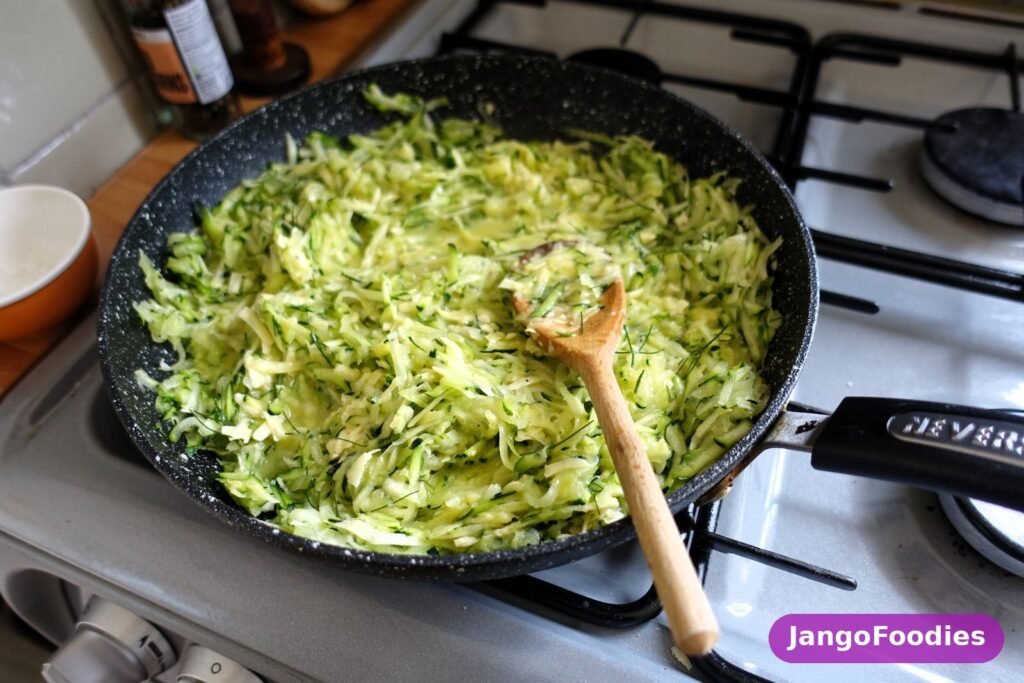
Now squeeze the zucchini, and I mean really squeeze it. Take handfuls of the grated zucchini and wring them out over the sink, or put the whole lot in a clean tea towel, twist it up, and squeeze until no more water comes out. You want the zucchini to feel quite dry, almost like damp sawdust, and you should end up with a surprisingly large amount of liquid in the bowl. This is the most important step in the whole recipe, and it is the one people are most tempted to rush. Do not rush it. A dry mixture holds together, fries or bakes into a crisp fritter, and tastes of zucchini and Parmesan. A wet mixture falls apart, steams instead of crisping, and tastes of disappointment.
Put the squeezed zucchini in a clean, dry bowl and add the beaten eggs, Parmesan, flour, garlic, herbs, black pepper, lemon zest, and baking powder, if you are using it. Stir everything together with a fork or a spatula until it is evenly mixed and holds together when you press a spoonful in your hand. It should feel moist but not wet, and it should keep its shape. If it feels too loose, add another tablespoon of flour. If it feels too dry, add a beaten egg yolk or a tablespoon of water. The mixture will vary a little depending on your zucchini, so trust your hands here more than the exact measurements, and aim for a mixture that you can shape without it sticking to everything.
Shape the mixture into fritters about the size of a small burger, using about a quarter of a cup of mixture for each one, and place them on the oiled tray, leaving a little space between them. Flatten each fritter gently with the back of a spoon or your palm, so it is about a centimetre thick, because thick fritters take longer to cook through and do not crisp as well. Brush the tops lightly with a little more olive oil, which helps them brown, and sprinkle over a little extra Parmesan if you like, because a cheesy, crisp top is never a bad idea.
Bake the fritters in the hot oven for 15 minutes, then take the tray out, flip each fritter carefully with a spatula, and brush the new tops with a little more oil. Put the tray back in the oven for another 12 to 15 minutes, until the fritters are deeply golden on both sides, crisp at the edges, and firm in the middle. They should feel set when you press them gently, and they should lift off the tray easily. If they are still pale, give them a few more minutes, because a pale fritter is a soft fritter, and you want crispness. Let them cool on the tray for five minutes before serving, so they firm up a little more, and serve them hot, with a squeeze of lemon and a dip if you like.
If you want to compare techniques, King Arthur Baking’s zucchini fritters is a good reference for the same squeezing and binding idea, and BBC Good Food’s courgette fritters shows how the same mixture works in a pan, if you ever want to try the fried version. The baked method is my everyday choice, because it is easier and cleaner, but the principles are the same either way: dry zucchini, enough binder, and enough heat to crisp the outside before the inside overcooks.
Tips for Perfect Baked Zucchini Fritters
Squeeze the zucchini until it is genuinely dry. This is the tip I will repeat, because it is the one that decides whether your fritters work or not. Salt it, leave it for ten minutes, then wring it out in a tea towel until you cannot get another drop out. If you are making a double batch, squeeze it in two lots, because a towel full of zucchini is hard to wring properly. Your hands will get a little tired, but it is worth it, and it is the only hard work in this recipe.
Use a hot oven and an oiled tray. A cool oven will steam the fritters instead of crisping them, and a dry tray will make them stick. Preheat the oven fully, brush the parchment with oil, and do not open the oven door too often while they bake, because every time you open it, the temperature drops and the fritters lose their crispness. A hot, steady oven is your friend here.
Keep the fritters thin and even. Thick fritters stay soft in the middle and take longer to cook, which means the outside can burn before the inside is done. Aim for about a centimetre thick, and make them all roughly the same size, so they cook in the same time. If you like smaller fritters, make them the size of a biscuit, and reduce the baking time by a few minutes, checking them early.
Do not overcrowd the tray. Fritters that are touching each other will steam where they meet, and you will get soft edges instead of crisp ones. Leave a gap of at least two centimetres between each fritter, and use two trays if you need to, rather than squeezing them all onto one. If you are using two trays, swap their positions halfway through baking, so both get time in the hotter part of the oven.
Season the mixture well and taste it as you go. The Parmesan is salty, so you may not need extra salt beyond the teaspoon used for squeezing, but a good grind of black pepper and a little lemon zest make a real difference. Fry or bake a tiny test fritter first if you are unsure, taste it, and adjust the seasoning before you shape the whole batch. It takes two minutes, and it means the whole tray will taste right.
Variations to Try
For a cheesy version, swap half the Parmesan for grated mature cheddar or crumbled feta. Cheddar melts into the fritters and makes them richer, while feta adds a tangy, salty bite that works beautifully with dill and lemon. If you use feta, crumble it in rather than grating it, and reduce the extra salt, because feta is already salty enough on its own.
For a spicy version, add a finely chopped red chilli, a pinch of chilli flakes, and half a teaspoon of smoked paprika to the mixture. The heat is gentle rather than fiery, and it wakes up the flavour of the zucchini without overpowering it. Serve these with a cooling yoghurt dip, which balances the spice, and a squeeze of lime instead of lemon, for a slightly different, fresher finish.
For a herby, Mediterranean version, add a handful of chopped sun-dried tomatoes, a tablespoon of chopped olives, and a little oregano to the mixture, and serve the fritters with a tomato salad and a dollop of tzatziki. This version tastes like summer, and it is lovely as part of a mezze-style meal, with bread, salads, and dips on the table for everyone to share.
For a gluten-free version, swap the plain flour for the same amount of chickpea flour, which adds a lovely nutty flavour, or use a gluten-free flour blend. Chickpea flour also helps the fritters hold together well, and it browns nicely in the oven. I have also made these with panko breadcrumbs instead of flour, which gives a crunchier, lighter fritter, though they are a little more delicate, so handle them gently when you flip them.
Serving Ideas
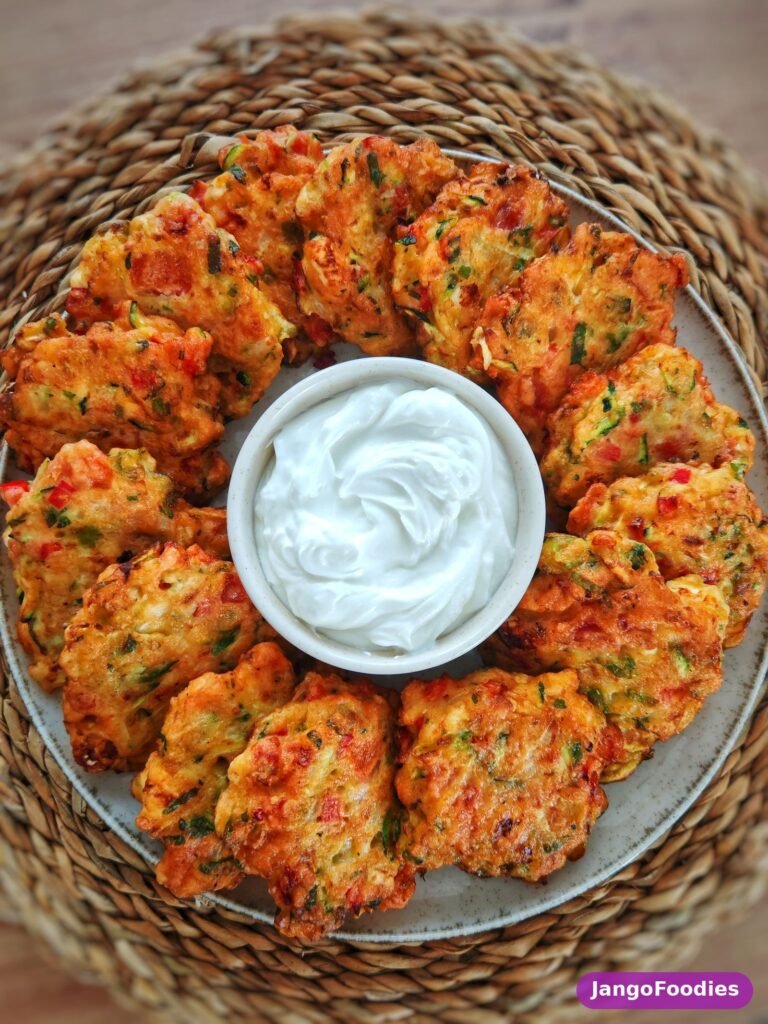
Serve these fritters hot, straight from the tray, with a simple dip and a squeeze of lemon. My favourite dip is Greek yoghurt mixed with a crushed clove of garlic, a squeeze of lemon juice, a pinch of salt, and a handful of chopped dill. It takes two minutes to make, and it is cool and creamy against the hot, crisp fritters, which is exactly the contrast you want. A spoonful of sour cream with chives works well too, and a shop-bought tzatziki is perfectly fine if you are short on time.
As a side dish, they go beautifully with grilled fish, roast chicken, or a simple salad, and they are a good choice when you want a vegetable side that feels a little more interesting than plain steamed zucchini. If you like crisp, golden food, air fryer bang bang shrimp are another favourite to serve alongside them. Put them on a plate with a green salad, some sliced tomatoes, and a piece of crusty bread, and you have a light lunch that is satisfying without being heavy. For a picnic, let them cool completely, pack them in a container with the dip in a separate pot, and eat them at room temperature, where they are still crisp enough to be enjoyable.
For a more substantial meal, serve two or three fritters per person with a poached egg on top and a handful of salad leaves, and you have a lovely brunch. The runny yolk over the crisp fritter is wonderful, and it turns a simple side dish into a main course. If you are looking for another crisp, oven-baked side, crispy air fryer potatoes without flour are a great match, and together they make a table full of golden, crunchy things that everyone will want to pick at.
Storage and Reheating
Store leftover fritters in an airtight container in the fridge for up to three days. They will soften a little as they sit, especially once they are cold, but they will still taste good, and they reheat well. I often eat them cold, straight from the fridge, as a snack, but if you want them crisp again, the oven is the way to go.
To reheat, spread the fritters on a baking tray and warm them in a hot oven at 200°C (400°F) for eight to ten minutes, until they are hot through and the edges have crisped up again. Avoid the microwave if you can, because it will make them soft and a little soggy, though it will heat them if you are in a hurry. A hot oven or an air fryer, for three to four minutes, brings back the texture that makes them so good.
To freeze, let the fritters cool completely, then place them in a single layer on a tray and freeze until solid, before transferring them to a freezer bag. This stops them sticking together, so you can take out just as many as you need. Freeze for up to two months, and reheat from frozen in a hot oven for twelve to fifteen minutes, until hot through and crisp. They are a wonderful thing to have in the freezer for a busy day, and they taste almost as good as freshly made.
Frequently Asked Questions
Why are my zucchini fritters falling apart?
This is usually because the zucchini was too wet, or there was not enough binder. Make sure you salt the grated zucchini, leave it for ten minutes, and then squeeze it until it is really dry, using a tea towel if you can. If the mixture still feels loose, add another tablespoon of flour or a little more Parmesan, and let it rest for five minutes before shaping, so the flour has time to absorb any remaining moisture.
Can I fry these fritters instead of baking them?
Yes, you can, and they are lovely fried. Heat a thin layer of oil in a large frying pan over medium heat, shape the fritters, and fry them for three to four minutes on each side, until golden and crisp. Drain them on kitchen paper before serving. Frying gives a slightly richer, crisper result, but it takes longer if you are making a big batch, because you have to fry them in batches, and the kitchen will smell of oil afterwards.
Can I make the mixture ahead of time?
You can make the mixture up to a few hours ahead and keep it in the fridge, but do not leave it overnight, because the zucchini will release more water as it sits, and the mixture will become soggy. If you do make it ahead, give it a good stir before shaping, and squeeze out any liquid that has collected at the bottom of the bowl. The fritters themselves are best shaped and baked just before serving, when they are at their crispiest.
What dip goes best with zucchini fritters?
A garlicky yoghurt dip is my favourite, made with Greek yoghurt, crushed garlic, lemon juice, salt, and fresh dill. Sour cream with chives is another good choice, and tzatziki works beautifully too. A simple tomato sauce, a sweet chilli sauce, or even just a squeeze of lemon and a pinch of flaky salt are all lovely, so use whatever you have in the fridge, and do not overthink it.
Can I use yellow squash instead of zucchini?
Yes, yellow squash works in exactly the same way, and it has a similar flavour and texture. You may find it releases a little more water, so squeeze it particularly well. You can also use a mix of zucchini and yellow squash, which looks lovely, with the green and yellow flecks in the fritters. The method stays the same, and the cooking time does not change.
Are baked zucchini fritters gluten-free?
Not as written, because they contain plain flour, but they are easy to make gluten-free. Swap the flour for chickpea flour, rice flour, or a gluten-free flour blend, in the same amount, and check that your baking powder is gluten-free. Chickpea flour is my favourite swap, because it adds flavour and helps the fritters hold together, and the result is just as crisp and golden as the original.