

Roasted Beet Salad with Goat Cheese
Beetroot is a vegetable that people either love or think they do not like, and I suspect that most of the people in the second group have only ever met it pickled from a jar, cold and vinegary, sitting next to a sad salad. Roasted beetroot is a completely different thing. When you roast it slowly in the oven, wrapped in foil, it turns sweet and earthy, soft all the way through, with a deep, ruby colour that stains everything it touches in the most beautiful way. Paired with creamy goat cheese, crunchy walnuts, and a sharp, tangy dressing, it becomes a salad that feels elegant and special, and it is one of my favourite things to make when I want a meal to feel a little bit dressed up.
I first had a beet and goat cheese salad at a small cafe, years ago, and I remember thinking how clever the combination was. The sweetness of the beet, the tang of the cheese, the crunch of the nuts, and the sharpness of the dressing all balanced each other, so no single flavour took over. I went home and tried to make it myself, and my first attempt was a mess, with beets that were undercooked in the middle and a dressing that was far too sharp, but I kept trying, and over time I learned the small things that make it work, like roasting the beets until they are completely tender, and letting them cool in their own juices before you peel them.
This salad is not difficult, but it does take a little time, because beets need a good hour in the oven to roast properly. The good news is that most of that time is hands-off, and you can roast the beets a day ahead, keep them in the fridge, and assemble the salad in five minutes when you are ready to eat. That makes it a wonderful dish for entertaining, because you can do the slow part in advance and still serve something that looks and tastes fresh and impressive, without spending the whole evening in the kitchen.
If you have never roasted beets before, do not be put off by the time or the mess. They will stain your hands a cheerful pink for a little while, which is part of the fun, and a pair of gloves or a good wash with lemon juice will sort that out. The result is worth it, because a roasted beet salad is one of those dishes that looks like it came from a restaurant, tastes like it took hours, and actually fits easily into a normal day, as long as you remember to put the beets in the oven in good time. Taste of Home’s beet salad is another good version to compare, with the same sweet beet and tangy dressing idea.
Why You’ll Love This Recipe
First, the flavours work together in a way that feels almost designed. Beetroot is sweet and earthy, goat cheese is creamy and tangy, walnuts are bitter and crunchy, and the dressing is sharp and bright, with a little mustard and honey to tie it together. Each bite has a little bit of everything, and the combination is more interesting than any of the parts on their own. It is a salad that people remember, and it is the one I make when I want to impress someone without trying too hard. In colder weather, I often follow it with a bowl of creamy chicken and wild rice soup, which is warm and comforting after a fresh, bright salad.
Second, it looks stunning. The deep red of the beets, the white of the goat cheese, the green of the leaves, and the brown of the walnuts make a plate that is genuinely beautiful, and it photographs well, if that matters to you. I have served this at a dinner party and had people take a photo before they picked up their forks, which is always a good sign. Food that looks good tastes better, or at least it feels better to eat, and this salad has that in spades.
Third, it is flexible. Serve it as a side dish with roast chicken or grilled fish, serve it as a light lunch on its own with some good bread, or serve it as a starter in small portions, and it works in all three roles. It is especially good with chicken tikka masala with basmati rice, where the warm spices and creamy sauce sit nicely next to the earthy beets and tangy goat cheese. You can swap the walnuts for pecans, the goat cheese for feta, the rocket for spinach, and the honey for maple syrup, and it will still be recognisably the same salad, just with a slightly different character. I will give you a few variations later, but the base recipe is solid and forgiving.
Finally, it is good for you in a quiet, practical way. Beets are rich in folate and fibre, walnuts add healthy fats, and the greens add freshness and crunch, which means you are eating something that is both satisfying and nourishing, without it feeling like a health food. I do not cook this salad because it is healthy, I cook it because it tastes wonderful, but it is nice to know that a dish this pretty is also doing you some good.
Ingredients You’ll Need
The ingredients are simple, but their quality matters, because this is a salad where every ingredient is visible and tasted on its own. Choose beets that feel firm and heavy, with smooth skin and no soft spots. If they come with their greens attached, save the leaves, because they are edible and lovely, though you will not need them for this recipe. Good goat cheese, fresh walnuts, and a decent olive oil will make a noticeable difference.
- 4 medium beetroot (about 600 g), scrubbed and trimmed
- 2 tablespoons olive oil, for roasting
- 1 teaspoon fine sea salt
- 1/2 teaspoon black pepper, freshly ground
- 100 g soft goat cheese, crumbled
- 75 g mixed salad leaves, or rocket, washed and dried
- 50 g walnuts, roughly chopped and toasted
- 3 tablespoons extra virgin olive oil, for the dressing
- 1 tablespoon red wine vinegar, or balsamic vinegar
- 1 teaspoon Dijon mustard
- 1 teaspoon honey, runny
- 1 small shallot, very finely chopped, optional
- 2 tablespoons fresh chives, or parsley, chopped
A note on the beets: if you can find golden beets as well as red ones, use a mix, because the contrast of red and gold on the plate is beautiful, and golden beets are a little milder and sweeter. Avoid canned beets for this salad, because they are too soft and too vinegary, and they will not give you the same sweet, roasted flavour. Fresh beets take longer, but they are worth the wait, and roasting them is mostly hands-off time anyway.
How to Make Roasted Beet Salad with Goat Cheese
Heat your oven to 200°C (400°F) and prepare the beets. Scrub them well under cold water, trim off the tops, leaving about two centimetres of stalk, and trim the root end, but do not peel them yet, because the skin comes off much more easily after roasting, and it protects the beet while it cooks. Place each beet on a large piece of foil, drizzle over a little olive oil, sprinkle with salt and pepper, and wrap it up tightly, like a parcel, so no steam escapes. Put the parcels on a baking tray and roast them in the oven for 50 to 60 minutes, depending on their size, until a knife slides into the centre easily, with no resistance at all. Large beets may need up to 75 minutes, so start checking at 50 minutes and give them more time if they are still firm in the middle.
While the beets roast, make the dressing and prepare the rest of the salad. Whisk the extra virgin olive oil, vinegar, mustard, honey, and a pinch of salt and pepper together in a small bowl or jar, until the dressing looks slightly thick and emulsified. Taste it and adjust it to your liking. It should be sharp and bright, with a little sweetness from the honey, and it should make your mouth water slightly. If it is too sharp, add a little more honey. If it is too sweet, add a splash more vinegar. Add the finely chopped shallot, if you are using it, and set the dressing aside. Toast the walnuts in a dry frying pan over medium heat for three to four minutes, shaking the pan often, until they smell nutty and look a shade darker. Watch them closely, because walnuts go from toasted to burnt very quickly, and burnt walnuts taste bitter. Tip them onto a plate to cool, so they do not keep cooking in the hot pan.
When the beets are tender, take them out of the oven and let them cool in their foil parcels for about fifteen minutes, until they are cool enough to handle but still warm. Open the parcels carefully, because hot steam will escape, and slip the skins off with your hands, using kitchen paper or gloves if you do not want pink fingers. The skins should come off easily, almost like peeling a banana, and if they do not, the beets probably need a little more roasting. Cut the peeled beets into wedges or thick slices, and put them in a bowl while they are still warm.
Pour about half the dressing over the warm beets and toss them gently, so every piece is coated. Warm beets absorb dressing much better than cold ones, and this is the step that makes the salad taste seasoned all the way through, rather than just on the surface. Let the beets sit in the dressing for at least ten minutes, or up to an hour, so they have time to soak it up. This is also a good time to taste a piece and check the seasoning. If it needs more salt, add it now, while the beets are still warm and will absorb it.
To assemble the salad, arrange the salad leaves on a large platter or in a wide, shallow bowl, and scatter the dressed beets over the top, leaving some of the leaves visible around the edges. Crumble the goat cheese over the beets, scatter over the toasted walnuts, and drizzle over the remaining dressing. Finish with the chopped chives or parsley, and a final grind of black pepper. Serve the salad at room temperature, not fridge cold, because the flavours are much better when the beets and cheese are not chilled, and the dressing flows more easily. If you want to see how another kitchen builds the same salad, BBC Good Food’s roasted beetroot and goat’s cheese salad is a good reference, and it uses the same roasted beet, goat cheese, and walnut combination that makes this dish work so well.
Tips for Perfect Roasted Beet Salad
Roast the beets until they are completely tender. This is the most important tip, because undercooked beets are hard and earthy in an unpleasant way, while properly roasted beets are soft, sweet, and almost creamy. Test them with a knife, not with a timer, because beets vary in size, and a large beet can need twenty minutes more than a small one. If the knife meets resistance in the centre, give them more time. It is almost impossible to overcook a beet wrapped in foil, so do not worry about leaving them in too long.
Dress the beets while they are still warm. Warm beets soak up dressing like a sponge, and the flavour goes right through them, while cold beets just get coated on the outside. This is the difference between a salad that tastes seasoned and a salad that tastes like plain beets with dressing on top. Toss the warm beets with half the dressing, let them sit for ten minutes, and then assemble the salad with the rest of the dressing drizzled over the top.
Toast the walnuts, and watch them carefully. Raw walnuts are soft and a little bland, but toasted walnuts are crunchy, nutty, and fragrant, and they add a lot to the salad. Toast them in a dry pan, shake the pan often, and take them off the heat as soon as they smell nutty, because they will keep cooking from the residual heat in the pan. Tip them onto a cool plate straight away, so they stop cooking, and let them cool completely before you scatter them over the salad, so they stay crisp.
Wear gloves or use kitchen paper when you peel the beets, unless you enjoy pink hands. Beet juice stains skin, chopping boards, and tea towels, and while it washes off skin with soap and a little lemon juice, it can stain a wooden board for a long time. I usually peel beets over a plate, using a piece of kitchen paper to hold them, and I wear an apron, because beet juice on a white shirt is a lesson you only need to learn once.
Balance the dressing. The dressing should be sharp enough to cut through the sweetness of the beets and the richness of the goat cheese, but not so sharp that it makes you wince. Taste it before you pour it on, and adjust the honey and vinegar until it tastes bright and lively. A good dressing should make you want another bite, not make you reach for water. If you are unsure, make it a little less sharp than you think, because you can always add more vinegar at the table, but you cannot take it away once it is on the salad.
Variations to Try
For a citrus version, swap the red wine vinegar for orange juice and a little lemon zest in the dressing, and add segments of orange to the salad. The citrus brightens the earthy beets and makes the whole salad feel fresher and lighter, which is lovely in summer. A little orange zest over the top at the end adds a wonderful fragrance, and the orange segments look beautiful against the deep red beets.
For a feta version, swap the goat cheese for crumbled feta, and swap the walnuts for toasted pistachios. Feta is saltier and firmer than goat cheese, and pistachios are greener and sweeter than walnuts, so the salad takes on a slightly different, more Mediterranean character. Add a handful of chopped mint to the leaves, and you have a salad that works beautifully with grilled lamb or chicken.
For a grain version, add a cup of cooked quinoa, farro, or pearl barley to the salad, tossing it with the beets and dressing so it soaks up the flavour. For a lighter, summery main, air fryer lemon pepper shrimp skewers are a lovely partner for this salad, with the same bright lemon notes. This turns a side salad into a substantial lunch, and it is a good way to use up leftover grains. The grains add a chewy texture that contrasts nicely with the soft beets and creamy cheese, and the salad keeps well in the fridge for a day or two, which makes it a good lunchbox option.
For a winter version, add thinly sliced red onion, soaked in cold water for ten minutes to take the edge off, and a handful of pomegranate seeds scattered over the top. The pomegranate adds a sweet, tart crunch and a jewel-like colour that makes the salad feel festive, and the onion adds a gentle bite. This version is lovely at Christmas, and it sits happily on a table full of rich, heavy food, because it is fresh and bright by comparison.
Serving Ideas
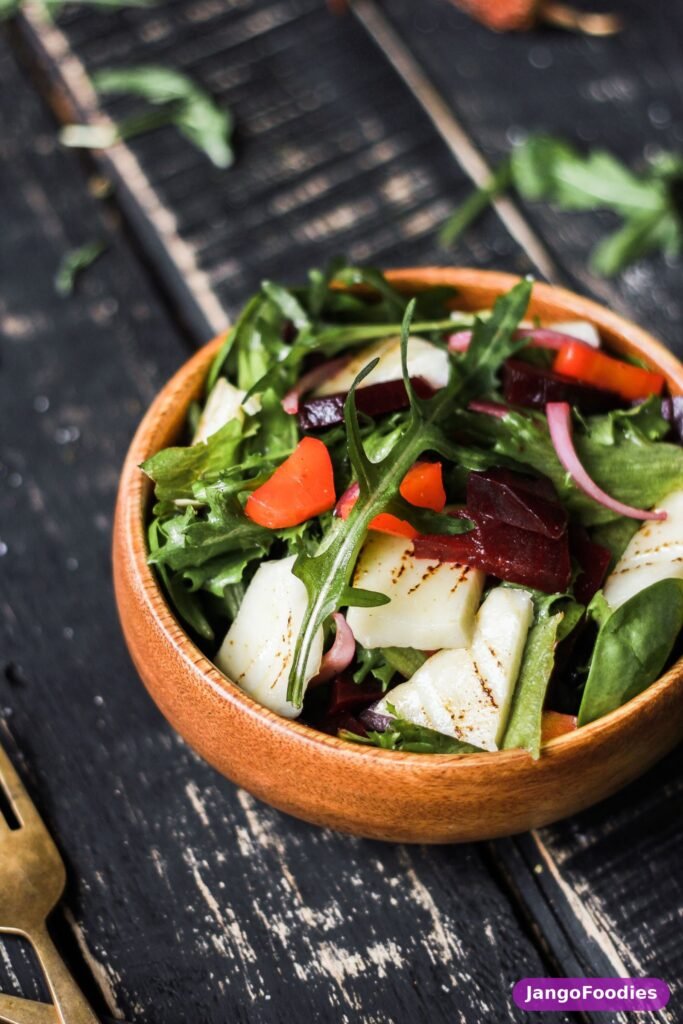
Serve this salad at room temperature, on a large platter, as part of a meal with roast chicken, grilled fish, or a simple quiche. The beets are the star, so give them space on the plate, and let people serve themselves, because the salad looks best when it is arranged loosely, with the beets, cheese, and walnuts visible, rather than tossed together into a uniform mix. A piece of good bread on the side is all you need to mop up the dressing, which is too good to leave on the plate.
As a light lunch, serve a generous portion on its own, with a slice of sourdough and a glass of something cold. It is satisfying without being heavy, and it keeps well, so you can make it in the morning and eat it at lunchtime, as long as you keep the leaves separate until you are ready to serve, so they do not wilt. I often make a double batch of beets and keep half in the fridge, so I can assemble a fresh salad the next day in five minutes, which feels like a small luxury on a busy day.
As a starter, serve small portions on individual plates, with a little extra goat cheese and a few walnut halves on top, and a drizzle of dressing around the edge. It looks elegant and restaurant-like, and it is a good way to start a dinner party, because it is light enough not to fill people up, but interesting enough to get them talking about the food. For another elegant starter or side, chicken piccata with lemon caper sauce is a lovely main course to follow it, and the lemon in both dishes ties the meal together.
Storage and Reheating
Store the roasted beets separately from the leaves and cheese, in an airtight container in the fridge, for up to four days. Dressed beets keep well, and they actually taste better the next day, once they have had time to soak up the dressing, so this is a salad that improves with a little time in the fridge, as long as you keep the components separate.
To serve leftovers, take the beets out of the fridge an hour before eating, so they come to room temperature, and assemble the salad fresh with new leaves, cheese, and walnuts. The leaves will wilt if they are stored dressed, and the walnuts will soften, so it is worth keeping them separate and adding them at the last minute. The dressing will keep in a jar in the fridge for up to a week, and it just needs a good shake before you use it again.
Leftover beets are also wonderful in other dishes. Slice them into a sandwich with goat cheese and rocket, chop them into a grain bowl, blend them into a soup with a little stock and cream, or toss them with pasta and walnuts for a quick, colourful supper. They are too good to waste, and they keep well enough that you can roast a big batch on Sunday and use them in different meals through the week, which is a practical way to eat well without cooking from scratch every day.
Frequently Asked Questions
How long do beets take to roast?
It depends on their size, but most medium beets take 50 to 60 minutes at 200°C (400°F), wrapped in foil. Large beets can take up to 75 minutes, and small beets may be done in 40 minutes. The best test is a knife, which should slide into the centre easily, with no resistance. If the knife meets resistance, give them more time, because it is almost impossible to overcook a beet wrapped in foil, and undercooked beets are hard and unpleasant.
Do I need to peel beets before roasting?
No, and I recommend roasting them unpeeled, because the skin protects the beet while it cooks and comes off much more easily afterwards. Once the beets are cool enough to handle, the skins should slip off with your hands, or with a little help from kitchen paper. Peeling them before roasting is harder, messier, and it can dry the beets out, so save yourself the trouble and peel them after.
Can I use canned or pre-cooked beets?
You can, but the result will not be the same. Canned beets are soft and vinegary, and pre-cooked vacuum-packed beets are better, but they still do not have the same sweet, concentrated flavour as beets you roast yourself. If you are short on time, pre-cooked beets will work, and you should dress them while they are warm, as you would with roasted beets, but if you have an hour, roasting fresh beets is worth it, and the difference is noticeable.
What cheese can I use instead of goat cheese?
Feta is the best substitute, because it is also salty and tangy, though it is firmer and crumblier than goat cheese. A soft blue cheese, like Gorgonzola, also works, if you like blue cheese, and it adds a stronger, more savoury flavour. For a milder option, use fresh mozzarella or burrata, which are creamy and gentle, and let the beets and dressing do the talking. Avoid hard cheeses like cheddar, which do not crumble well over a salad.
Can I make this salad ahead of time?
Yes, and it is a very good make-ahead salad, as long as you keep the components separate. Roast the beets up to two days ahead, store them in the fridge, and make the dressing up to a week ahead. Toast the walnuts and keep them in an airtight container at room temperature. Assemble the salad just before serving, so the leaves stay fresh and the walnuts stay crisp, and it will taste as good as if you had made it from scratch that day.
How do I stop beet juice staining everything?
Wear gloves or use kitchen paper when you peel and cut the beets, and peel them over a plate or a piece of parchment, not directly over a wooden chopping board, which will stain. Wash your hands with soap and a little lemon juice, which helps remove the colour. If you do stain a board, scrub it with salt and lemon juice, or leave it in the sun for a few hours, which fades the stain. An apron is a good idea too, because beet juice on clothes is hard to remove.