
Easy Cinnamon Coffee Cake
There is a particular kind of quiet that only exists in a kitchen early in the morning, before the day has properly started, when the coffee is brewing and the oven is warming up. That is when I most love making this easy cinnamon coffee cake. It is not a fussy cake, and it does not ask you to be a pastry chef. It asks for a bowl, a whisk, a pan, and about fifteen minutes of your attention, and in return it fills the whole house with the smell of cinnamon, brown sugar, and melted butter, which is honestly one of the best smells a home can have.
I first made a version of this cake for a slow Sunday brunch when friends were coming over and I wanted something warm on the table without spending the morning chained to the counter. I had butter, sour cream, flour, and a jar of cinnamon, which is really all this cake needs at its heart. The first slice came out of the pan still steaming, the cinnamon swirl running right through the middle, the crumb topping crisp on top and soft underneath. My friend asked for the recipe before she had even finished her coffee, and I have been making it the same way ever since, with only small tweaks here and there.
What makes this cake so reliable is the way the layers work together. The batter itself is soft and tender, thanks to the sour cream, and it stays moist for days, which is more than I can say for a lot of coffee cakes I have tried. Then there is the cinnamon sugar ribbon in the middle, which melts slightly as it bakes and turns into a warm, spiced stripe you can see in every slice. And on top, a buttery crumb that is deliberately a little chunky, so you get crunch first and then softness underneath. Nothing about it is complicated, but every part earns its place.
You do not need coffee in the cake at all, despite the name, and you certainly do not need to save it for a special occasion. I have baked it on ordinary weekday mornings, cut it into squares for lunchboxes, warmed a slice for an afternoon break, and taken it to neighbours who had just moved in. It travels well, it slices cleanly once it has cooled a little, and it tastes just as good the next day, maybe better, once the cinnamon has had time to settle into the crumb. If you are looking for one dependable cake to keep in your back pocket, this is a very good one to choose.
Why You’ll Love This Recipe
First, it is genuinely easy. There is no creaming butter and sugar for ten minutes, no separating eggs, no fussy layering. You whisk the dry ingredients in one bowl, the wet ingredients in another, stir them together, and layer the batter with cinnamon sugar in the pan. The crumb topping comes together with your fingertips in about two minutes. If you can stir, you can make this cake, and that is not something I say lightly, because I have handed this recipe to people who told me they cannot bake, and they have all come back with a cake they were proud of.
Second, the texture is exactly what a coffee cake should be. The crumb is fine and tender without being dry, the middle stays soft, and the top has that slightly crisp, sugary crunch that makes you want to pick at the edges before you even cut a slice. Sour cream is doing a lot of the quiet work here. It adds richness and a very gentle tang, and it keeps the cake moist far longer than milk alone would. If you have ever baked a cake that was lovely on day one and dry by day two, you will notice the difference here straight away.
Third, it fits almost any moment. It is sweet enough for dessert with a spoonful of whipped cream, but not so sweet that it feels wrong at breakfast with a cup of coffee. I have served it warm from the oven at brunch, at room temperature on a cake stand at a family gathering, and cold from the fridge, cut into small squares, as an afternoon snack. It also freezes beautifully, which means you can bake it on a quiet day and have something homemade ready for a busy one, and that kind of planning ahead is worth a lot in a real kitchen.
Finally, it is easy to make your own. The base recipe is solid, but it welcomes small changes. A handful of chopped pecans in the crumb, a little orange zest in the batter, a drizzle of vanilla glaze on top, or a swap to a gluten-free flour blend that you already trust, all work without upsetting the balance. For another easy bake, easy oatmeal cookies without eggs are soft, chewy, and just as simple to make. I will give you a few variations later in this article, but the point is that this cake does not punish you for experimenting. It is forgiving, and forgiving recipes are the ones we come back to again and again. If you like baking in small batches, my small-batch chocolate chip cookies use the same simple, forgiving method.
Ingredients You’ll Need
You will not need anything unusual for this cake. Most of these ingredients are probably already in your pantry, and the few that are not are worth keeping on hand, because once you have made this once, you will want to make it again. Measure everything before you start, so the baking itself feels calm and unhurried.
- 2 cups all-purpose flour, spooned and levelled so the cake stays light
- 1 teaspoon baking powder
- 1/2 teaspoon baking soda
- 1/2 teaspoon fine sea salt
- 1/2 cup unsalted butter, softened to room temperature
- 1 cup granulated sugar
- 2 large eggs, at room temperature
- 1 tablespoon pure vanilla extract
- 1 cup full-fat sour cream, at room temperature
- 1/2 cup light brown sugar, packed, for the cinnamon swirl
- 2 tablespoons ground cinnamon, for the swirl and crumb
- 1/2 cup all-purpose flour, for the crumb topping
- 1/4 cup cold unsalted butter, cubed, for the crumb topping
- 1/4 cup light brown sugar, packed, for the crumb topping
- 1/4 teaspoon fine sea salt, for the crumb topping
A quick note on the sour cream: full-fat really does matter here, because it is what keeps the cake tender and moist. Low-fat sour cream will work in a pinch, but the cake will be a little less rich, and plain full-fat Greek yoghurt is a better swap if sour cream is not in your fridge. Bring the eggs, butter, and sour cream to room temperature before you start, because cold ingredients do not mix as smoothly, and a smooth batter is the first step to a soft crumb.
How to Make Easy Cinnamon Coffee Cake
Start by heating your oven to 350°F (175°C) and greasing a 9-inch square baking pan, then lining the bottom with a piece of parchment paper with a little overhang on two sides. That overhang is a small thing, but it makes lifting the cake out later so much easier, and it means you can slice it neatly on a board instead of wrestling with it in the pan. While the oven heats, whisk the flour, baking powder, baking soda, and salt together in a medium bowl and set it aside. In a separate small bowl, stir together the brown sugar and cinnamon for the swirl, and in another bowl, rub the cold butter into the flour, brown sugar, cinnamon, and salt for the crumb until it looks like coarse, damp sand with some pea-sized lumps left in it. Pop the crumb bowl in the fridge while you make the batter, because cold crumb holds its shape better in the oven.
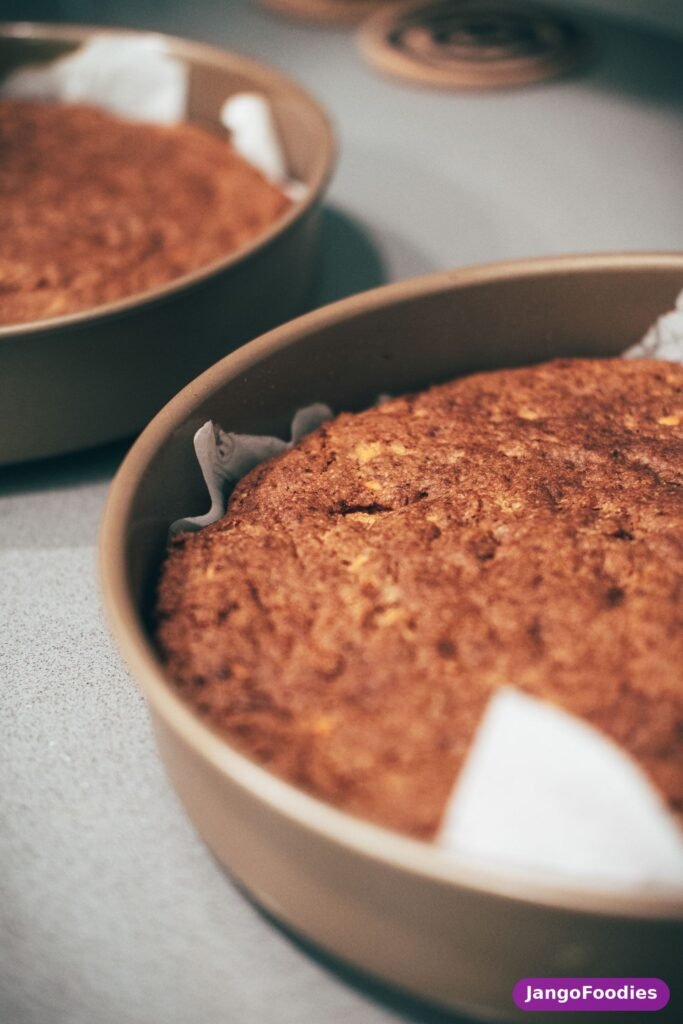
Now make the batter. Beat the softened butter and granulated sugar together in a large bowl for two to three minutes, until the mixture looks pale, fluffy, and almost creamy. This is the one step worth taking your time over, because it is what puts air into the cake and keeps it light. Add the eggs one at a time, beating well after each one, then stir in the vanilla. The mixture might look slightly curdled for a moment, and that is perfectly fine. Next, add the dry ingredients in three parts, alternating with the sour cream, starting and ending with the flour. Stir gently with a spatula or a wooden spoon, just until the flour disappears. Stop as soon as you cannot see dry flour any more, because overmixing is the quickest way to turn a tender cake tough, and no amount of cinnamon can rescue a tough crumb.
Spoon half of the batter into the prepared pan and spread it into an even layer with the back of a spoon or a small offset spatula. It will be thick, so do not worry if it does not pour like a thin batter; just nudge it gently into the corners. Sprinkle the cinnamon sugar mixture evenly over the top, right out to the edges, so every slice gets some of that warm, spiced ribbon. Then dollop the remaining batter over the top in spoonfuls and spread it carefully, trying not to drag the cinnamon layer up into the batter. It does not need to be perfect. A few swirls of cinnamon peeking through the top layer will look lovely once the cake is baked, and nobody at the table will mind.
Scatter the chilled crumb topping evenly over the surface, pressing it down very lightly with your fingertips so it sticks to the batter. Bake the cake in the centre of the oven for 40 to 45 minutes, until the top is golden, the edges are pulling very slightly away from the sides of the pan, and a skewer or toothpick inserted into the centre comes out clean or with just a few moist crumbs clinging to it. If the top starts browning too quickly, loosely tent a piece of foil over the pan for the last ten minutes. Every oven runs a little differently, so start checking at 38 minutes and trust the skewer more than the clock. The smell in your kitchen at this point will be wonderful, and it will be tempting to cut into it straight away. Taste of Home’s cinnamon coffee cake uses a similar baking time and the same kind of crumb topping, which is a useful cross-check if this is your first coffee cake.
Let the cake cool in the pan on a wire rack for at least 20 minutes before you lift it out using the parchment overhang. That rest is important, because the cake is still setting inside, and cutting it too soon will make it crumble. I know it is hard to wait, and I have burned my fingers more than once trying to steal a warm corner, but the cake slices so much more cleanly once it has cooled a little. Serve it warm or at room temperature, plain or with a cup of coffee, and cut it with a sharp, thin knife, wiping the blade between slices if you want really neat squares. If you like, you can dust the top with a little icing sugar just before serving, though the crumb topping is honestly enough on its own.
If you want to compare methods, you will find that many bakers layer their coffee cake in exactly this way, and King Arthur Baking’s cinnamon coffee cake is a good example of the same swirl-and-crumb idea done with care. The details differ from kitchen to kitchen, but the principle stays the same: a tender sour cream batter, a cinnamon layer in the middle, and a crumb that stays crisp. Once you have made this version a few times, you will start to know by feel when the batter is right, when the crumb is chunky enough, and when the cake is done, and that kind of confidence is what turns a recipe into a habit.
Tips for Perfect Cinnamon Coffee Cake
Measure your flour properly, because too much flour is the most common reason a coffee cake turns dry. Spoon the flour into your measuring cup and level it off with a knife, rather than scooping straight from the bag, which packs the flour down and can add a surprising amount. If you own kitchen scales, 250 grams of flour for the batter is the most reliable measure of all, and it is worth using them for the crumb too, because a consistent crumb topping makes a consistent cake.
Keep the crumb topping cold until the moment it goes on the cake. Warm butter melts into the flour and turns the topping into a flat, greasy layer instead of the crisp, chunky crumbs you want. If your kitchen is warm, make the crumb first and keep it in the fridge while you prepare everything else. The same goes for the butter in the batter, which should be soft but not oily or melting; it should give easily when you press it, but still hold its shape.
Do not overmix the batter once the flour goes in. Stir just until you cannot see dry flour, then stop, even if the batter looks slightly uneven. A few small lumps will disappear in the oven, but a tough, chewy crumb will not. This is the single most useful tip I can give you for any cake, and it is especially true here, because the sour cream batter is already rich and soft, and it does not need extra handling to come together.
Check for doneness with a skewer, not just by looking at the top. The crumb topping browns quickly and can fool you into thinking the cake is done while the middle is still soft. Insert the skewer into the centre, away from the cinnamon swirl if you can, and look for clean metal or a few moist crumbs. If wet batter clings to the skewer, give the cake another five minutes and check again. A cake that is slightly underbaked in the middle will sink as it cools, so it is better to wait a few extra minutes than to rush it out.
Let the cake cool before slicing, and store it properly if there is any left. Twenty minutes in the pan, then lift it out and let it finish cooling on a rack, will give you clean slices and a crumb that holds together. If you are serving it warm, that is fine, but use a sharp knife and a gentle sawing motion rather than pressing down hard, which squashes the soft layers. Small habits like these are what separate a good homemade cake from a great one, and they cost nothing at all.
Variations to Try
For a nutty version, fold half a cup of finely chopped pecans or walnuts into the crumb topping, and sprinkle a few extra on top before baking. The nuts toast in the oven and add a lovely crunch that works beautifully with the cinnamon. If you are baking for someone with a nut allergy, skip them entirely and add a tablespoon of rolled oats to the crumb instead, which gives a similar texture without any nuts at all.
For a fruit version, scatter a cup of thinly sliced apples or a handful of fresh blueberries over the cinnamon layer before you add the top layer of batter. Apples soften into the cake and taste like autumn, while blueberries burst slightly and leave little pockets of jammy sweetness. Frozen blueberries work too, but do not thaw them first, and toss them in a teaspoon of flour so they do not sink to the bottom.
For a glazed version, whisk half a cup of icing sugar with a tablespoon of milk and half a teaspoon of vanilla, then drizzle it over the cooled cake in thin lines. It sets into a sweet, pretty finish that makes the cake feel a little more dressed up, which is nice if you are serving it to guests. A pinch of cinnamon in the glaze ties it back to the cake, and a little orange zest in the batter underneath gives the whole thing a fresh, bright edge.
For a lighter, dairy-free version, swap the butter for a good baking margarine or a neutral oil in the same amounts, and use a dairy-free sour cream or thick coconut yoghurt. The texture will be slightly different, a little less rich, but still soft and pleasant. I have also made this with a cup-for-cup gluten-free flour blend, and it worked well, though the cake was a touch more delicate, so I let it cool completely before slicing. Whatever version you choose, keep the cinnamon generous, because that is the flavour everyone remembers.
Serving Ideas
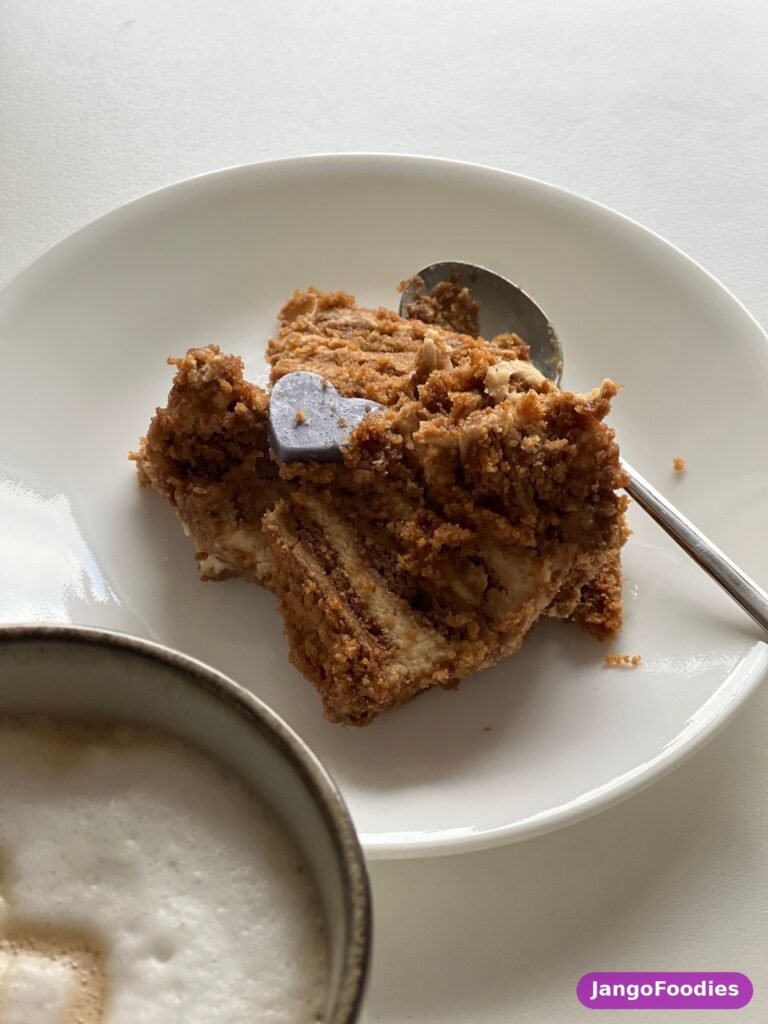
The simplest way to serve this cake is warm, in thick squares, with a cup of coffee or tea. There is a reason it is called coffee cake, and it is not just tradition. The bitterness of the coffee balances the sweetness of the crumb, and the warmth of the cake makes the whole thing feel like a small pause in the day. I like to put the cake on a wooden board in the middle of the table and let people cut their own slices, because it keeps things relaxed and nobody has to worry about being polite with portions.
For brunch, serve it alongside fresh fruit, a bowl of yoghurt, and something savoury like scrambled eggs or a simple frittata, so the table has a mix of sweet and savoury. The cake holds its own next to stronger flavours, and it is substantial enough that one square per person is usually plenty. If you are feeding a crowd, bake it in a 9 by 13 inch pan instead, double the recipe, and add five to ten minutes to the baking time, checking with a skewer as always.
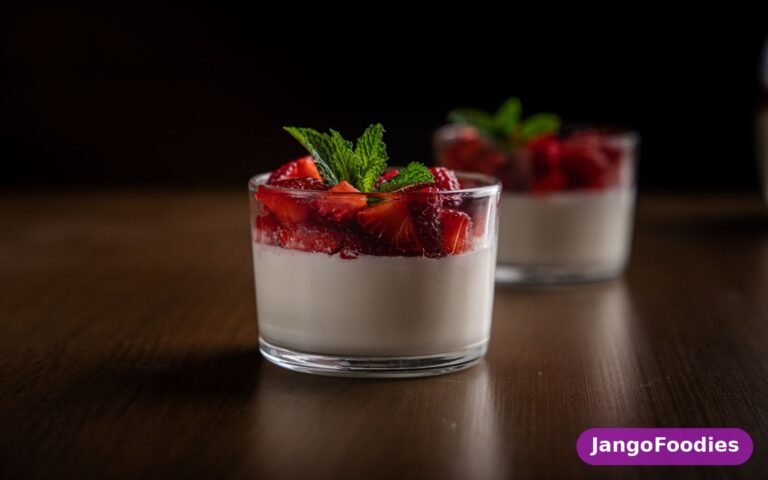
For dessert, warm a slice gently in the microwave for fifteen seconds and serve it with a scoop of vanilla ice cream or a spoonful of softly whipped cream. The contrast between the warm, spiced cake and the cold cream is lovely, and it turns an everyday cake into something that feels like a proper pudding. A drizzle of caramel sauce would not hurt either, though I would keep it light, because the cinnamon is the star here and you do not want to drown it. For a lighter, make-ahead dessert, classic vanilla bean panna cotta is a lovely contrast to this warm, spiced cake. If you enjoy baking for gatherings, easy apple pie bars with streusel are another good dessert to have in your repertoire, and they use the same kind of crumb topping, so the technique will already feel familiar.
Storage and Reheating
Store the cooled cake in an airtight container at room temperature for up to three days. It actually tastes wonderful on the second day, once the cinnamon has settled into the crumb, and I often think the flavour improves overnight. Keep it away from direct sunlight and away from the fridge if you can, because refrigeration dries out cake faster than room temperature storage does, even though it feels like the safer choice.
For longer storage, wrap individual slices tightly in cling film, then place them in a freezer bag or container, and freeze for up to three months. Label the bag with the date, because frozen cake has a way of being forgotten at the back of the freezer. To serve, thaw a slice at room temperature for an hour, or warm it in the microwave for twenty to thirty seconds until it is just warm through. It will taste almost freshly baked, which is a small miracle when you are short on time.
If you have leftover cake that is starting to dry out, do not throw it away. Cube it, toast the cubes lightly in the oven, and use them as a topping for yoghurt or ice cream, or layer them with custard and fruit for a quick trifle. Stale coffee cake makes a surprisingly good trifle, because the cinnamon and crumb soak up the custard beautifully. It is a practical way to use up every last bit, and it means nothing goes to waste.
Frequently Asked Questions
Does coffee cake actually contain coffee?
No, it does not, and this is the question I get asked most often. Coffee cake is named for the drink it is traditionally served with, not for an ingredient in the batter. This recipe has no coffee in it at all, so it is fine for children and for anyone who avoids caffeine. If you do want a coffee flavour, you can add a teaspoon of instant espresso powder to the batter, but it is entirely optional, and the cake is lovely without it.
Can I make this cake without sour cream?
Yes, you can, and plain full-fat Greek yoghurt is the best substitute, used in the same amount. It gives the same tang and moisture, and the cake will bake up almost identically. Buttermilk is another option, though it is thinner, so the batter will be a little looser, and the cake may need a few extra minutes in the oven. I would avoid low-fat sour cream if you can, because the cake will be less rich, but it will still work in a pinch.
Why did my crumb topping melt into the cake?
This usually happens when the butter in the crumb was too warm, or the crumb was mixed too much and turned into a paste instead of staying chunky. Next time, use cold butter, cut it into small cubes, and rub it in with your fingertips only until you have pea-sized lumps, then chill the crumb in the fridge while you make the batter. A cold, chunky crumb holds its shape in the oven and stays crisp on top, which is exactly what you want.
Can I bake this in a different pan?
Yes, and it is quite flexible. A 9-inch round cake pan works well, though the cake will be slightly thicker and may need five extra minutes. A 9 by 13 inch pan works if you double the recipe. A loaf pan will give you a taller, narrower cake, but you will need to bake it longer and check the centre carefully, because the middle takes longer to set. Whatever pan you use, line it with parchment and grease the sides, so the cake comes out cleanly.
How do I know when the cake is done?
The most reliable test is a skewer or toothpick inserted into the centre of the cake. It should come out clean, or with just a few moist crumbs attached. If wet batter clings to it, the cake needs more time. The top should be golden brown, the edges should be pulling very slightly away from the sides of the pan, and the cake should spring back gently when you press the centre with a fingertip. If you have a thermometer, the centre should read around 200°F (93°C), which is a useful check if you bake often.
Can I make this cake ahead of time?
Yes, and it is a very good make-ahead cake. You can bake it the day before, let it cool completely, and store it in an airtight container at room temperature. The flavour actually improves overnight as the cinnamon settles in. You can also freeze it for up to three months, either whole or in slices, and thaw it at room temperature. If you want to serve it warm, heat slices gently in the microwave for twenty seconds, or warm the whole cake in a low oven for ten minutes, covered loosely with foil so the crumb does not dry out.